


The Rebranding Guide: The red flags your company needs a reset

Last update: 5 March 2025 at 12:27 am
2025 will be the year of the rebrand.
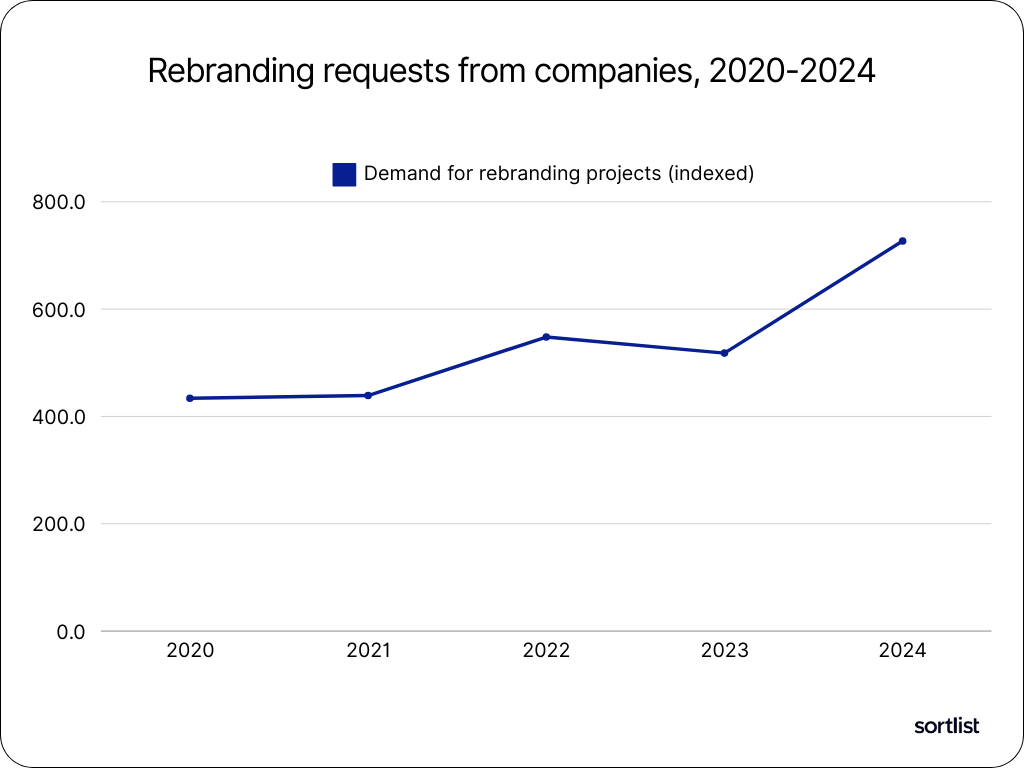
Just last year we saw an increase in rebranding projects of 40.3% compared to the year before, and the trend shows that number will only continue to rise.
That’s because, today, creating a brand has never been easier: the democratization of technology, the boom of no-code tools to build websites and apps, and the rise of AI have allowed companies to speed up their processes and entrepreneurs to create at a rate never seen before.
This means that you could be competing today with more businesses than you’d imagine. And it also shows that a rebrand is just about strategy as it is about changing your logo or refreshing your website.
But without the right expertise, experience and skills, a rebrand is a risky business. That’s why it’s one of the most misunderstood and undervalued business strategies.
In this 3-part series, we spoke to three expert agencies that specialize in branding to get the most up-to-date insights about everything that involves brand creation. Rload Studio, CRU Brand Consultancy, and Designlaboratory have worked on 500 branding projects since 2020 for companies worldwide, and have 20 marketing and design awards to back up their expertise.
Read on to know the why’s, the when’s, and the how much’s to do a rebrand, backed by data from over 250,000 projects on Sortlist.
Why a strong brand matters more than ever
Even the strongest brands have expiration dates.
As markets shift, customer preferences evolve, and competitors innovate, your once-perfect brand might start to feel outdated or out of sync.
We saw as much on Sortlist: of the businesses requesting a rebrand last year, a tenth sought positioning at the core of their rebrand.
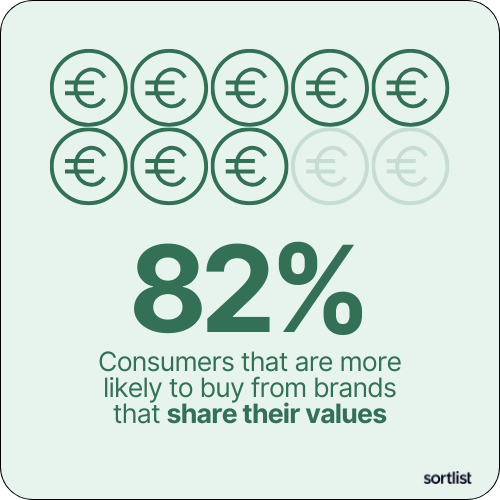
Studies show that 82% of consumers are more likely to buy from brands that share their values. But it’s more than emotional connection.
Strong branding can reduce acquisition costs, improve retention, and make your business more resilient in the face of competition.
And staying on-brand pays off: a study found that a quarter of marketers saw an increase of 20% in revenue thanks to consistent messaging.
So if your brand is failing to deliver these outcomes, it’s time to take a closer look.
Is it time for a rebrand? Spotting the red flags
Business owners and marketers deciding to rebrand can take the same advice that goes for writers and editors: don’t be afraid to kill your darlings.
The expert agencies we spoke to shared some of the clear signs that hint that a rebrand might be in order.
#1: Don’t discard your gut feeling
CRU Brand Consultancy is a Berlin-based brand consulting firm that specializes in bringing strategy, story, design, and experience together.
Lasse Giese, CRU’s cofounder, says that the first sign that a company may be in need of a rebrand is the gut feeling.

“Usually you know when something doesn’t feel right. If you wake up as a founder or a C-level and you need to present something about your company, but you don’t know what to say or it’s something you’re not particularly proud of, that’s a good indicator.“
–Lasse Giese, cofounder of CRU Brand Consultancy
When your brand no longer feels like an authentic reflection of who you are as a company, it creates a deep sense of disconnect. If your brand identity is confusing or uninspiring, potential clients may hesitate to trust or engage with you.
And a weak brand presence also affects business. If you hesitate when presenting your company, imagine how your customers feel. A brand that doesn’t instill pride won’t instill trust either, and trust is the foundation of customer loyalty.
#2: Mismatch with client persona
A brand should be a mirror of its ideal customer.
The second indicator is a mismatch with the client persona. In particular, think about who your ideal customer is and how much the brand reflects that customer.
In Lasse’s words: “Is there a wish to change the customer base? Is the current brand reaching the desired customer base?”
Rload Studio cofounder Beatriz Carballo also agrees.

“When we carry out rebranding projects, our clients’ concerns are similar: their brand no longer connects with the target audience and they feel that they are outdated, stagnant, and vulnerable in their sectors.“
–Beatriz Carballo Martín, cofounder of Rload Studio
Such mismatch can lead to wasted resources: if your brand identity attracts the wrong audience, your team spends more time filtering out poor-fit leads rather than closing high-value ones. Over time, this weakens your market positioning and makes competitors with a stronger, clearer identity the preferred choice.
A brand that doesn’t evolve with its customers risks becoming irrelevant. If your audience has changed, but your brand hasn’t, it’s time to realign.
#3: Clients leaving the sales cycle
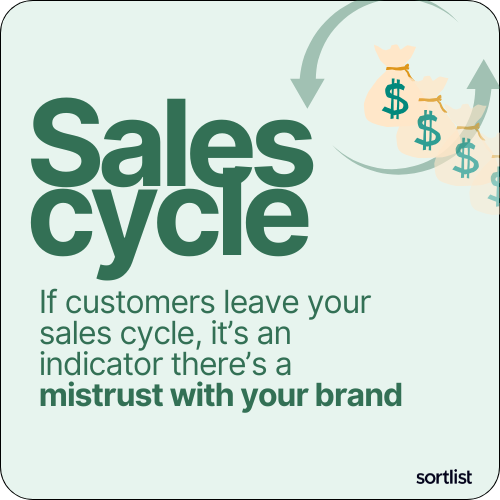
The client mismatch is also intricately linked to pricing, especially if clients keep jumping off the sales cycle.
“If you want to reach a certain price level, but you can’t because your customers jump off the sales cycle, then it’s also an indicator that there is some mistrust and that it’s time to work on the brand,” Lasse argues.
This is frustrating from a business perspective. Your team puts in the effort to generate leads, nurture relationships, and guide prospects toward conversion… only to see them disappear before signing the contract.
When a brand doesn’t communicate trust, credibility, or value, potential clients hesitate. They may love what you offer but feel uneasy about committing. They might wonder: does this company really deliver? Is it worth the price?
If your pricing and positioning signal one thing, but your branding signals another, the disconnect creates doubt. In business, doubt kills deals.
#4: Difference in internal vs. external perception
Lasse also identifies internal versus external perception problems, noting that when the internal perception of the company is better than the things people or clients see from the outside, it’s a clear sign that a rebrand is in order.
But that doesn’t mean a rebrand is the first thing a CEO or a marketer thinks about at the start. One of CRU’s clients, Symbio, had a 20-year history in B2B process management with large clients, but in the words of Lasse, they had “reached flat growth.”
Symbio is a business software company based in Germany, that is now acquired by the New York-based Celonis. But before that, Symbio was dealing with a perception issue.


CRU found that Symbio’s internal perception of the company was much more positive than how they were perceived externally by potential clients, and this disconnect was a great red flag indicating a need to work on their brand.
The rebrand helped Symbio enhance their communication and emphasize their position as innovators, ultimately leading to a great acquisition deal by Celonis, a German data processing company based in New York.
#5: Getting left behind by trends
From a broader perspective, Bea says that, more often than not, rebranding is a strategic decision to strengthen against the competition.
That’s exactly what Rload did in a rebrand project for the digital art studio The Impossible Things, in Spain.


The challenge was to remake the brand in a way that complemented its artistic creations, in line with its “impossible object” approach to design that was fast becoming the norm in the sector.
“It becomes a case of adapting to trends without losing essence.“
–Beatriz Carballo Martín, cofounder of Rload Studio
We’ll talk more in-depth about these two projects in issue 2 of this rebranding series, but for now, suffice to say that these two rebrands managed to clear up their communications and ensure that their target audiences were precisely addressed.
A rebrand is a complex decision… but it could save your business
All of this begs the question: is rebranding easy? Absolutely not.


However, that’s why you’ve got platforms like Sortlist, that simplify the process by connecting brands with specialized providers that can make the process easy via their expertise.
Still, you may find that time, budget, and emotional attachments to the existing brand are common challenges that could stop you from doing the much-needed makeover.
Next week, we’ll explore in detail why there is so much resistance to rebranding, and how successful companies have overcome that in their approach to their rebrand projects. Stay tuned for issue 2 of our Rebranding series.


