

7 Smart Website Visitor Identification Strategies for 2026 – Radar

In today’s privacy-first, data-driven digital landscape, identifying website visitors is more crucial than ever. Businesses are under increasing pressure to understand who is engaging with their online presence without compromising trust or compliance.
Today’s advanced identification strategies go far beyond traditional analytics, providing actionable insights that lead to higher conversion rates and smarter go-to-market decisions. Companies that leverage modern identification and intent tools gain a competitive edge by converting anonymous website visitors into qualified leads.
Techniques such as intent data, AI-powered analytics, and cross-channel integration help organizations transition from guesswork to actual knowledge about their audiences. New platforms are also making these capabilities more accessible by combining visitor identification, buying intent signals, and market insights in a single, privacy-conscious environment.
This article explores seven innovative website visitor identification strategies for 2026. It is packed with practical steps, real examples, and expert advice to help your business thrive.
Key Takeaways
- Website visitor identification has shifted from visibility to prioritization. In 2026, the goal isn’t to identify every visitor, but to recognize which companies and signals indicate real buying intent, so teams can focus where it matters most.
- Intent and context now matter more than raw traffic. Understanding why visitors are on your site is more valuable than knowing how many arrive. Intent data turns anonymous visits into meaningful demand signals.
- Privacy-first approaches are essential, not optional. As cookies disappear and regulations tighten, sustainable visitor identification depends on consent, transparency, and first-party data strategies.
- Isolated data limits impact. Website insights only become actionable when connected across marketing, sales, and revenue systems, creating a shared, reliable view of demand.
- Speed and focus create competitive advantage. Teams that can detect demand early, predict conversion likelihood, and act quickly will outperform those relying on reactive or manual processes.
Why Website Visitor Identification Matters in 2026
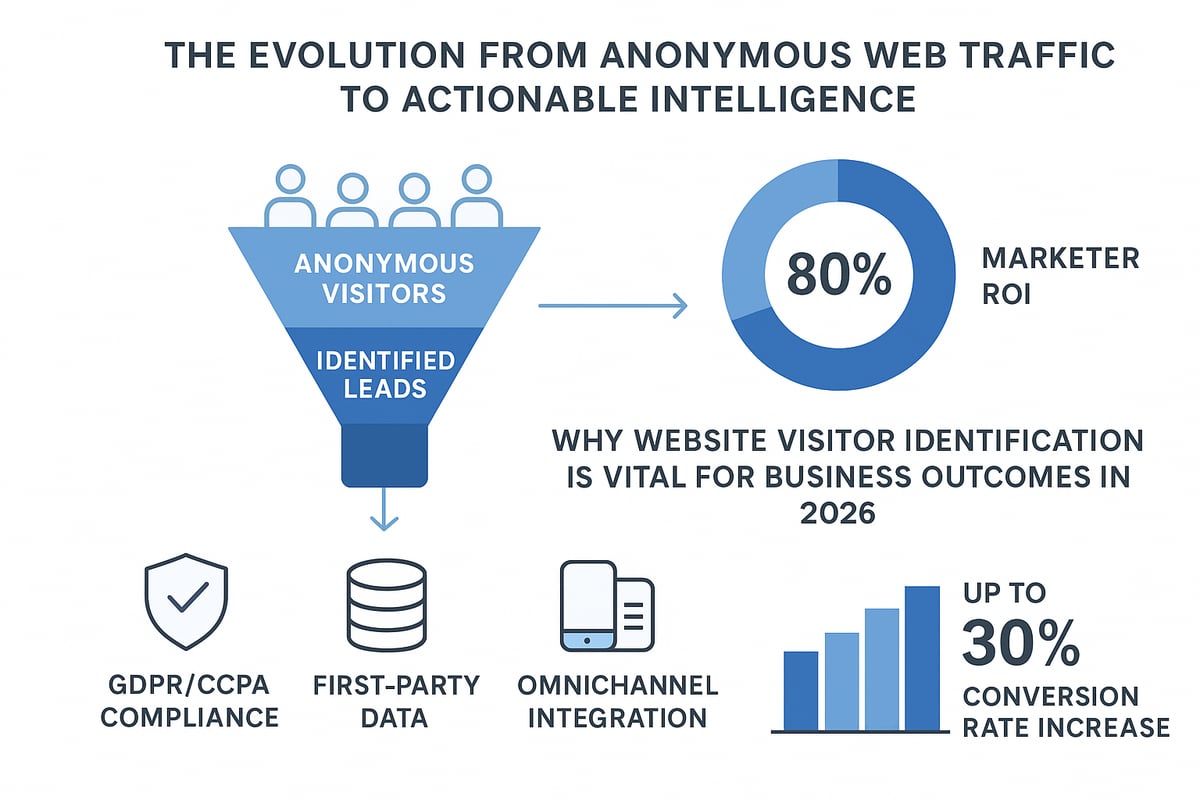
In 2026, the digital landscape is defined by a shift from anonymous website traffic to precise, actionable intelligence. Businesses can no longer rely on surface-level metrics like page views. Website visitor identification now provides the foundation for understanding who is engaging with your site, their intent, and where they are in the buying journey.
This evolution is driven by the need to transform visitor data into tangible business results. Website visitor identification is now at the heart of lead generation, account-based marketing campaigns, and sales enablement. Knowing which companies, and sometimes which decision-makers, are showing buying intent allows you to prioritize outreach and personalize engagement at scale.
Privacy regulations such as GDPR and CCPA continue to influence how data is collected and utilized. The decline of third-party cookies has accelerated the shift toward first-party data, compliant enrichment, and transparent consent practices. Consequently, modern identification strategies focus on combining behavioral signals with ethical data usage.
The impact is measurable. B2B companies that use advanced visitor identification techniques report conversion rate increases of up to 25%, and the vast majority of marketers say that better website visitor data directly improves ROI. In 2026, identifying leads visiting your website will be essential for strategic growth.
7 Smart Website Visitor Identification Strategies for 2026
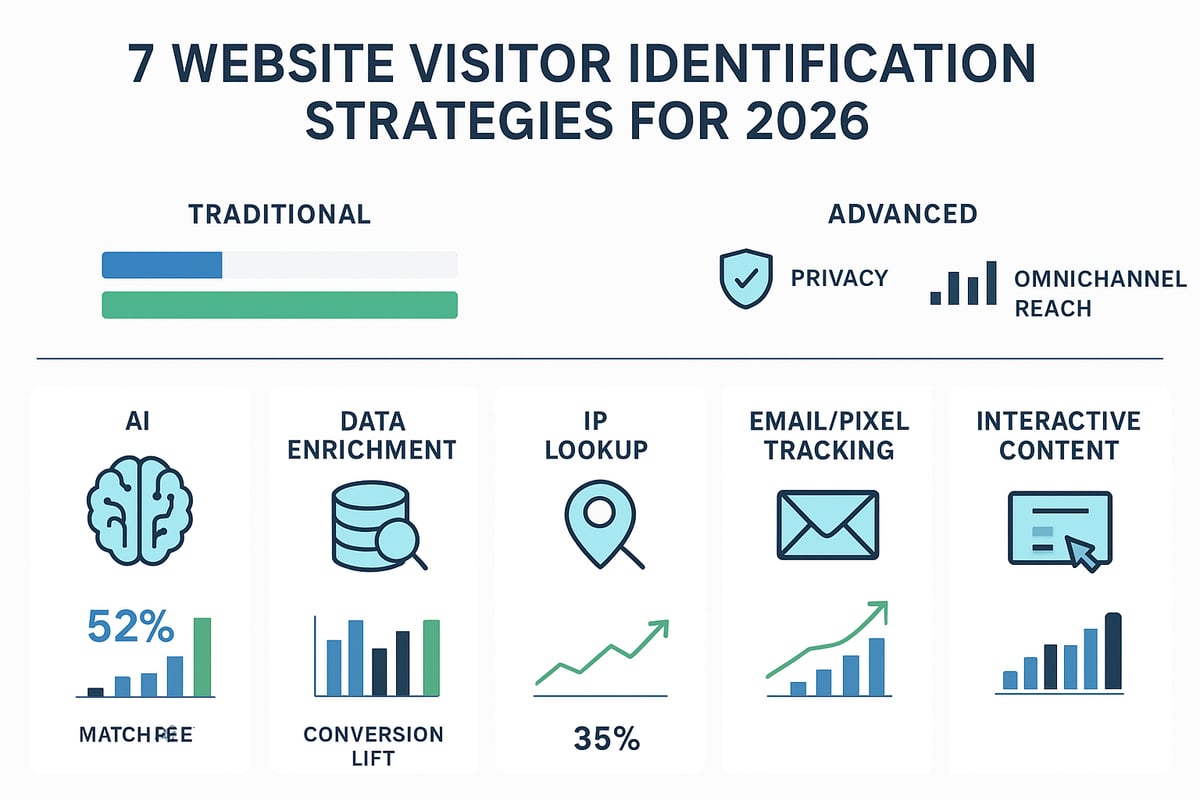
Today, identifying your website visitors requires a sophisticated, multi-layered approach. The most effective strategies blend AI, intent intelligence, and privacy-first data enrichment to create a clearer picture of demand without relying on outdated tracking methods.
The seven proven strategies below are being used by forward-thinking teams to unlock deeper insights, improve conversions, and stay compliant.
1. AI-Powered Identity Resolution: Turning Signals Into Certainty
In 2026, AI-powered identity resolution is less about “identifying anonymous website visitors” and more about making sense of fragmented signals on a large scale. Modern buyers leave traces everywhere, multiple visits, different devices, and varied content paths, and AI stitches those moments together.
Rather than treating each session as isolated, machine learning models analyze patterns over time, such as page depth, frequency, content themes, and engagement velocity. The result isn’t just a name or company; it’s context. Your sales and marketing teams can instantly identify which accounts are progressing from curiosity to intent.
This strategy is powerful because it is adaptable. As cookies fade and privacy expectations rise, AI systems continuously learn from first-party data and compliant enrichment sources. For B2B teams navigating long buying cycles, AI-powered identity resolution provides clarity where manual analysis simply can’t keep up.
Make the right choice with confidence
Discover the most the power of intent signals by Radar
Show me more2. Intent Data Enrichment: Understanding Why Anonymous Visitors Show Up
It’s valuable to know who visits your site. Knowing why they’re there is transformative.
Intent data enrichment shifts the identification of website visitors from observation to interpretation. It combines visitor behavior signals, such as repeated visits to solution pages or competitor comparisons, with external research activity across the web. Suddenly, a visit isn’t just website traffic; it’s a buying signal.
In practice, marketing teams no longer have to guess which leads deserve attention. Instead, their outreach aligns with real-time interest. For example, a company researching pricing today might receive a tailored case study tomorrow, while a top-of-funnel visitor might see educational content.
In 2026, intent data isn’t a “nice add-on.” It’s the lens that transforms raw visitor identification into prioritization, particularly for account-based strategies where timing is paramount.
3. Real-Time Reverse IP Lookup: The Way to Faster Sales Cycles
Reverse IP lookup is one of the simplest and fastest ways to immediately identify website visitors.
Within minutes, your team can see which companies are landing on your site, which high-intent pages those companies’ representatives are exploring, and how often they return. For your sales team, this visibility creates momentum. Instead of cold outreach, conversations begin with relevance: “We noticed your team has been exploring…”
However, IP data alone is no longer sufficient. Remote work, shared networks, and VPNs have reduced its precision. In 2026, reverse IP lookup will work best as a trigger, prompting deeper analysis through intent data, AI scoring, or CRM enrichment, rather than a conclusion.
When used strategically, reverse IP lookup remains a powerful early-warning system for inbound demand.
4. Email & Pixel-Based Visitor Matching: Recognizing Visitors Across Touchpoints
Buyers don’t move in straight lines. They browse on mobile, then return on desktop and convert days or weeks later. Email and pixel-based matching exist to account for this behavior.
By linking website behavior to hashed email identifiers and pixels, brands can recognize returning visitors across sessions and devices. This continuity enables smarter retargeting, more relevant messaging, and smoother handoffs between marketing and sales.
The key shift in 2026 is restraint. Successful teams will focus less on aggressive website visitor tracking and more on value-driven recognition, using this visitor data to reduce friction rather than increase noise. When paired with clear consent and transparency, email and pixel-based matching can provide the foundation for consistent, personalized experiences.
5. Progressive Profiling & Interactive Content: Letting Visitors Lead
Not every visitor wants to hand over their details immediately, and forcing the issue often backfires in 2026.
Progressive profiling flips the script. Rather than demanding information upfront, brands now invite visitors to engage through quizzes, assessments, calculators, and gated insights. Over time, each interaction reveals a little more.
This strategy works because it aligns with how people actually behave. Visitors stay in control, data collection feels earned, and profiles become richer without overwhelming users. The added bonus? Interactive content often doubles as a qualification tool, signaling interest level long before a form is completed.
For teams focused on trust and long-term engagement, progressive profiling is one of the most human-centered approaches to identifying visitors.
6. Cross-Channel Data Integration: Breaking the Silos That Kill Insight
Identifying website visitors loses its impact when it exists in isolation.
Cross-channel data integration solves this problem by connecting website behavior with visitor interactions, CRM records, email engagement, sales activity, and external intent sources. The result is a unified view of each account, showing not just what happened on the site, but also what happened before and after.
In 2026, the focus will shift from collecting more data to making existing data usable. Successful teams invest in clean pipelines, shared definitions, and tools that unify insights across departments.
When marketing, sales, and revenue teams see the same signals, personalization improves, attribution becomes clearer, and decision-making accelerates.
7. Predictive Analytics for Visitor Segmentation: Acting Before Visitors Raise Their Hand
Predictive analytics represents a shift from a reactive to a proactive approach to identifying visitors.
Rather than waiting for form submissions or demo requests, AI models analyze visitor behavior patterns to predict which visitors or accounts are most likely to convert. These predictions drive real-time actions, such as prioritizing sales outreach, triggering personalized journeys, and adjusting on-site experiences.
The real advantage lies in focus. With limited time and resources, teams can focus on the most important visitors while still nurturing the rest automatically.
In 2026, predictive analytics will ensure that identifying website visitors isn’t just informative, it’s actionable data.
Key Challenges in Website Visitor Identification for 2026
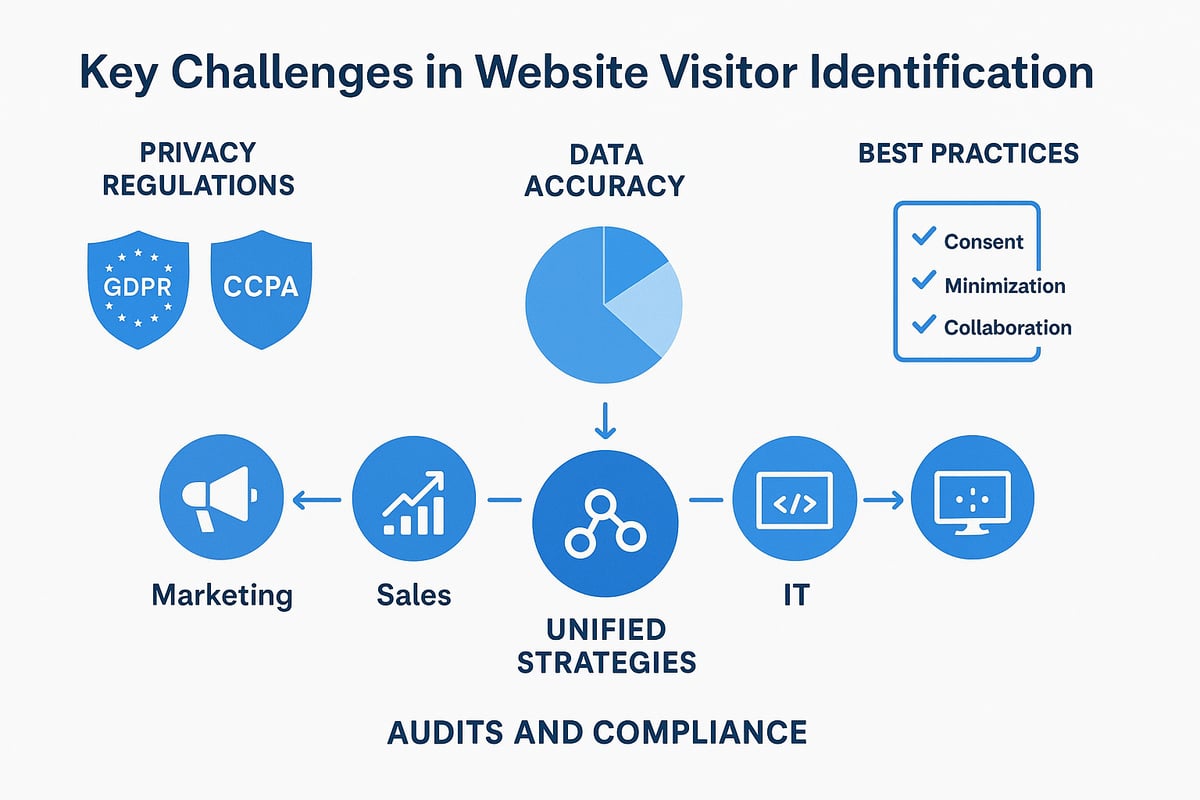
As website visitor identification becomes more sophisticated, challenges related to privacy, data quality, and internal alignment increase. The most successful organizations treat identification as a long-term capability, not a quick win.
Best practices include:
- Prioritizing explicit consent and transparency
- Focusing on first-party and ethically sourced data
- Choosing visitor tracking software that emphasizes accuracy and security
- Aligning marketing, sales reps, and revenue teams
- Auditing identification strategies regularly.
Trust is the currency of 2026. Companies that respect it will build lasting relationships and win more than just conversions.
Future Trends in Website Visitor Identification
In 2026, staying ahead with website visitor identification will be essential as digital marketing continues to evolve. Businesses must watch emerging trends that are changing how we recognize, engage with, and protect visitors.
Key Trends To Watch
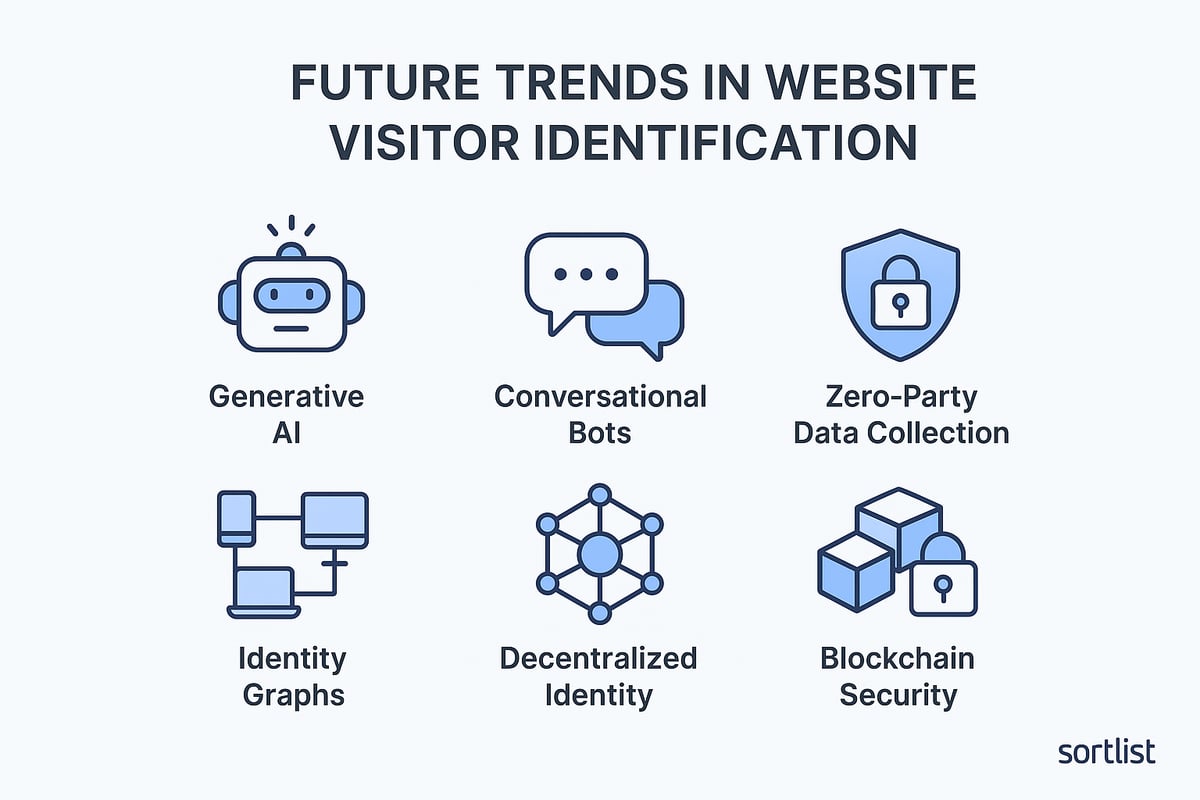
- Generative AI and Conversational Interfaces: Next-generation AI tools will transform the identification of website visitors by analyzing their real-time behavior, intent, and preferences. Chatbots and virtual assistants can gather insights while improving the user experience.
- Zero-Party Data and Voluntary Sharing: As privacy expectations increase, brands will encourage visitors to share information directly through surveys, quizzes, and interactive content. This shift empowers users and provides marketers with high-quality, consented data for identifying website visitors.
- Identity Graphs and Cross-Device Resolution: Advances in identity graphs will unify fragmented data across devices and channels. Marketers will connect interactions from mobile, desktop, and offline touchpoints to create a comprehensive profile of each visitor.
- Privacy-First Technologies and Decentralized Identity: New solutions will prioritize consent, transparency, and user control. Decentralized identity, in which visitors manage their own credentials, will gain traction. This approach supports compliance and builds trust in identifying website visitors.
- Blockchain for Secure Identity Management: Early adopters are using blockchain technology to create tamper-proof visitor identities. This approach helps brands securely verify users while maintaining privacy, setting a strong foundation for future visitor identification strategies.
To remain competitive, organizations must actively track emerging trends, invest in privacy-first technologies, and maintain flexibility as standards, buyer expectations, and data regulations evolve. The future of identifying website visitors will be shaped by intelligence, transparency, and speed, rewarding companies that can translate signals into timely and compliant actions.
As we’ve seen, identifying website visitors in 2026 goes far beyond traditional analytics. It’s about understanding intent, recognizing market demand, and connecting the dots across channels to see who is actively exploring your solutions and why. Tools like Sortlist Radar make this shift actionable by combining visitor identification, intent signals, and market insights into a single, privacy-conscious view of demand. If your team is ready to transition from observation to growth, collaborating with the right technology and expert partners is key to turning these strategies into measurable results.
Conclusion
As buyer behavior continues to fragment across channels and devices, the real challenge in 2026 won’t be access to data; it will be knowing which signals matter and how to act on them. The strategies in this guide highlight a clear shift: effective identification of website visitors is now about prioritization, timing, and alignment across teams, not just visibility.
Organizations that can quickly spot emerging demand, understand how interest compares across the market, and respond with relevance at the right moment will succeed. This requires tools built for today’s privacy standards and tomorrow’s decision-making speed.
Sortlist Radar supports this next phase by helping teams detect active demand, identify meaningful intent, and focus on opportunities most likely to convert, without adding complexity or compromising compliance. If your goal is to move faster with clearer insight and convert visitor activity into real business momentum, Radar is designed to help you do exactly that.