

7 Powerful Intent Signals Marketers Should Track in 2026

Did you know that more than 60% of marketing leaders believe that data-driven insights are key to staying ahead in digital marketing? In 2026 the race to connect with buyers is becoming faster and more complex. Marketers who want to drive growth, personalize outreach, and maximize ROI must now understand and track intent signals.
In this article, you’ll discover seven powerful intent signals that can transform your campaigns and boost sales. Are you ready to unlock actionable strategies and outpace your competition? Start tracking these signals today.
Key Takeaways
- Intent signals reveal real buyer readiness. Behavioral signals such as website visits, research activity, and content engagement help marketers understand where prospects are in the buying journey and identify which accounts are most likely to convert.
- First-party data is the foundation of intent insights. Website engagement, email interactions, and event participation provide direct signals of interest and are among the most reliable indicators of buyer intent.
- External signals expand visibility into the buyer journey. Third-party research activity, keyword trends, technographic changes, and hiring signals help marketers detect buying momentum even before prospects interact directly with their brand.
- Intent signals are most powerful when combined. Analyzing multiple signals together gives marketing and sales teams a clearer picture of buyer readiness, allowing them to prioritize outreach and improve targeting accuracy.
- Turning intent data into results requires the right systems. A unified data stack, AI-driven analytics, and strong alignment between marketing and sales teams are essential for transforming raw intent signals into pipeline growth and measurable ROI.
What Are Intent Signals?
Intent signals are behavioral indicators that reveal a prospect’s interest in a product, service, or topic. They help marketers understand where buyers are in the decision-making process, from initial research to final vendor selection.
These signals are generated through real actions, such as:
- Visiting pricing or product pages.
- Comparing solutions on review platforms.
- Attending webinars or events.
- Downloading white papers or case studies.
- Researching competitors or related topics.
Since only 3–5% of buyers are actively in the market at any given time, identifying intent signals enables your marketing and sales teams to concentrate their efforts on accounts with the highest probability of conversion, rather than wasting resources on low-probability prospects.
These signals can originate from first-party sources, such as your website and CRM, as well as third-party intent data providers, including review platforms, publisher networks, and market intelligence tools. For instance, Sortlist Radar is a platform that uncovers intent at the market level by tracking agency demand trends, category growth, and shifts in buyer interest. This enables businesses to spot emerging opportunities earlier and align their strategy accordingly.

Ultimately, intent signals transform anonymous activity into actionable insights, enabling your teams to engage with buyers more effectively.
Why Intent Signals Matter More Than Ever in 2026
In 2026, intent signals have become a cornerstone of effective, data-driven marketing. As buying journeys grow longer and more complex, these signals offer valuable insight into a prospect’s readiness, priorities, and likelihood of purchasing.
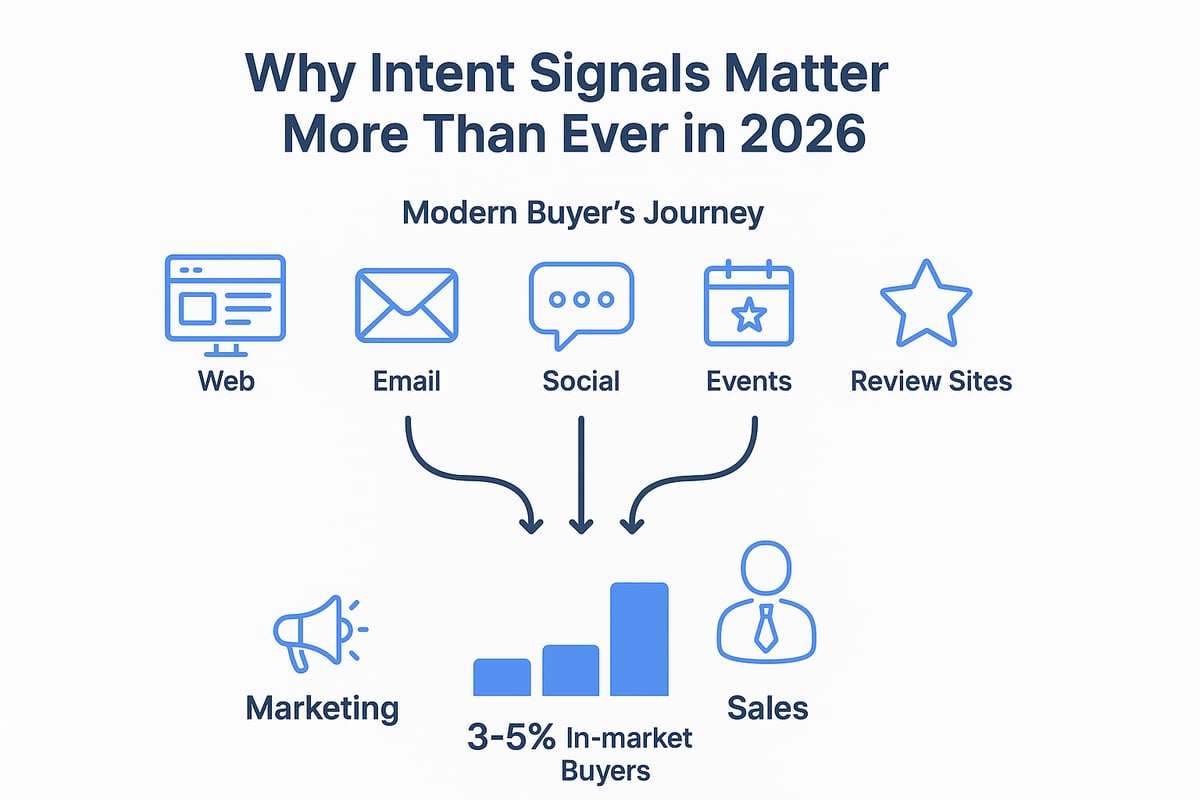
Today’s buyers interact with brands across dozens of digital touchpoints, including websites, social media, review platforms, communities, and virtual events. This creates an unprecedented volume of behavioral data. In this environment, marketers who can identify meaningful intent signals early gain a decisive competitive advantage.
By leveraging intent data signals, organizations can:
- Prioritize high-value accounts.
- Improve lead scoring accuracy.
- Personalize outreach and messaging.
- Align marketing and sales teams.
- Increase conversion rates and pipeline efficiency.
For example, when a company detects increased activity, such as repeated visits to a product page or spikes in content downloads, it can trigger timely, personalized engagement, achieving measurable improvements in revenue performance and sales productivity.
Intent intelligence is also becoming more strategic, helping businesses understand not just individual prospects, but also broader market dynamics. Tools such as Sortlist Radar provide insights that allow marketing teams to identify rising demand across industries and anticipate shifts before they fully materialize, thereby improving planning and competitive positioning.
However, successfully leveraging intent signals requires overcoming several challenges:
- Navigating privacy regulations such as GDPR and CCPA.
- Filtering out noise and false positives.
- Integrating data from multiple sources.
- Using advanced analytics to interpret behavioral patterns.
Understanding why intent signals matter is important, but translating that knowledge into results requires focusing on observable buyer behaviors. Every interaction, whether researching solutions, engaging with content, or evaluating vendors, creates signals revealing where prospects are in their journey. The key is recognizing which actions indicate genuine buying momentum, allowing teams to respond with the right message at the right time.
The 7 Powerful Intent Signals Marketers Should Track in 2026
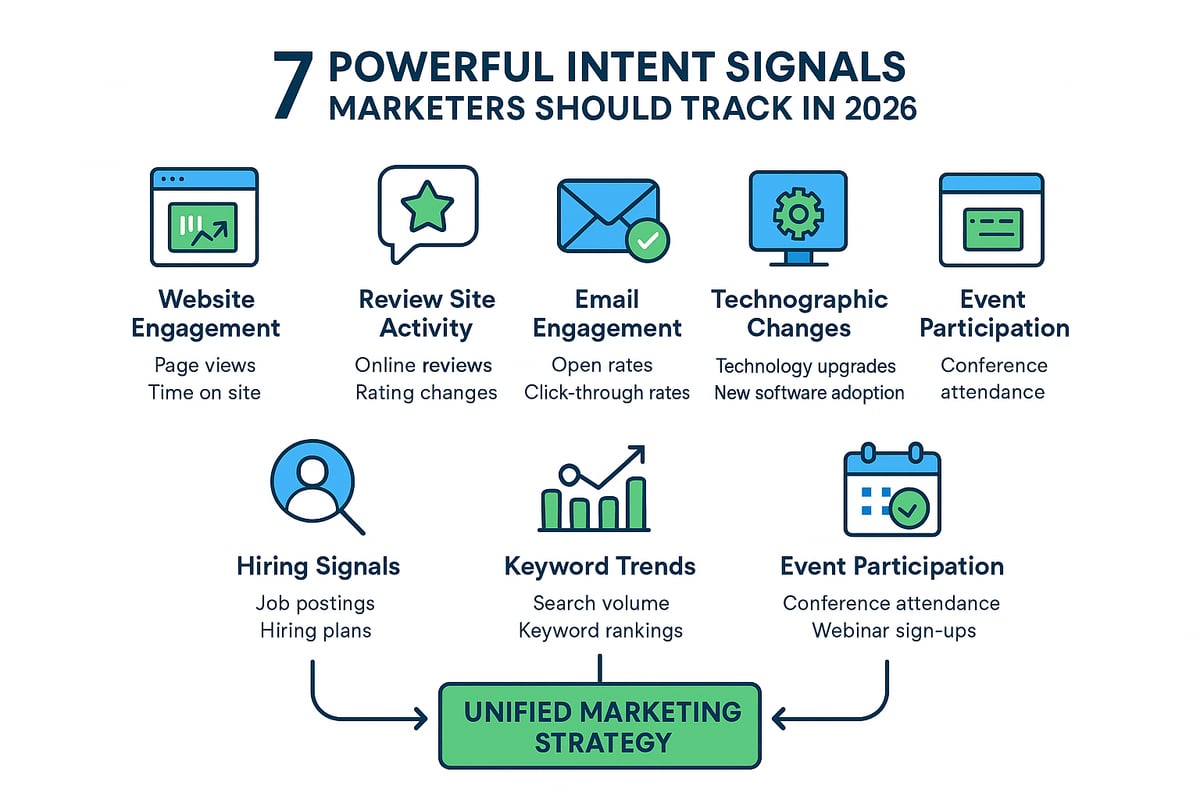
Some buyer behaviors consistently correlate with a higher probability of conversion and a stronger impact on the pipeline. The most valuable signals indicate active evaluation, internal alignment, or preparation to make a purchase decision. By tracking these indicators, marketers can improve targeting, support sales with better timing, and allocate resources where they are most likely to generate revenue. The following seven signals of intent are among the most reliable for identifying and engaging high-potential prospects in 2026.
1. Website Engagement and Content Consumption
Website engagement is one of the most reliable and accessible signals of intent available to marketers because it reflects direct, first-party buyer behavior. When prospects visit high-intent pages, such as pricing, product, demo, or contact pages, it often indicates that they are actively evaluating solutions rather than casually browsing.
To accurately assess intent, monitor behavioral metrics such as:
- Time spent on key pages.
- Scroll depth and content interaction.
- Frequency of return visits.
- Navigation paths between product, pricing, and conversion pages.
These patterns reveal how serious a prospect is and how close they are to making a decision.
Content consumption provides additional layers of insight. When visitors download gated assets, such as white papers, case studies, or buyer guides, they demonstrate a clear willingness to exchange their information for valuable resources. This action signals trust and active research. Similarly, spikes in demo requests or repeated visits to decision-stage content often indicate that a prospect is moving from the consideration stage to the purchase stage.
Use behavioral lead scoring models to operationalize these insights and rank prospects based on their engagement level and buying readiness. This enables sales and marketing teams to prioritize high-buyer intent accounts, personalize their outreach, and improve the effectiveness of their retargeting.
2. Third-Party Research and Review Site Activity
Once buyers have moved beyond casual awareness, they often turn to independent platforms to validate their options. Review sites such as G2, Capterra, and TrustRadius are critical at this stage because they allow prospects to compare vendors, read customer feedback, and evaluate the strengths and weaknesses of each vendor. This behavior typically signals that buyers are actively creating a shortlist.
What makes this data especially valuable is the context it provides. For instance, an account that views your profile alongside multiple competitors or returns several times to evaluate specific features demonstrates far stronger purchase intent than one that interacts only with top-of-funnel content. These comparison patterns reveal not just interest, but active decision-making.
Beyond individual review platforms, publisher networks like Bombora and TechTarget aggregate content consumption across thousands of sites. Spikes in research around relevant categories, integrations, or problem areas can indicate that a company is preparing to make a purchase, even before visiting your website directly.
Incorporating these third-party intent signals into your account strategy helps teams focus on prospects who are already in evaluation mode. It also provides strategic insight into what buyers care about most. This allows marketers to refine their positioning, address objections proactively, and provide sales teams with more relevant talking points. As a result, outreach becomes more timely, informed, and aligned with real buyer priorities.
3. Email and Direct Communication Engagement
Unlike many other channels, email provides immediate, measurable insight into how prospects respond to your messages. Every interaction, whether opening a newsletter, clicking on a product link, replying with a question, or sharing the email internally, offers clues about the prospect’s level of interest and buying readiness.
While surface-level metrics like open and click-through rates are useful starting points, deeper behavioral signals tell a more meaningful story. For example, repeated opens within a short timeframe, extended time spent reviewing linked content, or engagement from multiple stakeholders within the same company often indicate active internal discussions. When a contact forwards a pricing guide or case study to colleagues, it’s often a sign that the evaluation process has transitioned from individual to group decision-making.
Reply behavior is especially powerful. Direct responses, such as requests for more information, questions about features, or inquiries about integrations, signal a higher level of intent than passive consumption. These actions suggest that the prospect is considering practical next steps rather than just exploring.
By incorporating these behaviors into lead scoring and segmentation models, sales and marketing teams can prioritize follow-ups based on real engagement patterns. This enables more relevant nurture sequences, better-timed outreach, and stronger alignment between messaging and target account readiness. When interpreted correctly, email engagement becomes a reliable indicator of who is progressing through the funnel and who is ready for meaningful sales conversations.
4. Technographic Changes and Technology Adoption
Changes in a company’s technology stack can reveal valuable insights about its priorities, level of maturity, and willingness to invest in new solutions. For B2B marketers, technographic intent signals and data can help identify moments when organizations are evolving their infrastructure, which often signals an openness to additional tools, integrations, or upgrades.
Examples of these shifts include adopting a new CRM platform, expanding marketing automation capabilities, or replacing legacy systems. Even smaller changes, such as upgrading from a free plan to a paid version of a tool or increasing the number of software licenses, can indicate growing operational needs and budget allocation.
Technographic insights become even more powerful when viewed in context. For example, if a company recently implemented a new CRM, it may soon require additional solutions for analytics, automation, or customer data management. Recognizing these patterns enables marketers to approach prospects with highly relevant messaging that aligns with their current technology environment.
Teams can tailor outreach to match each organization’s stack and stage of adoption by incorporating technographic data into segmentation and account targeting. According to several sources, technographic signals are particularly effective for identifying integration opportunities, competitive replacement scenarios, and potential upsell paths. Leveraging these insights helps ensure that sales and marketing efforts reach prospects when they are most likely to consider investing in new technology.
5. Organizational and Hiring Signals
Internal changes within a company often signal new priorities, strategies, or investments on the horizon. Leadership transitions, team expansions, and new role creations can indicate that an organization is preparing for operational shifts, many of which involve evaluating new tools, services, or partners.
Job postings can be particularly revealing. When a company starts hiring for roles related to your solution, such as a marketing automation manager, revenue operations specialist, or head of data, it often suggests that the organization is planning to build or expand capabilities in that area. These signals usually appear long before a purchasing decision is made, providing marketers with an opportunity to engage with potential customers early in their buying journey.
Executive changes can be equally meaningful. A newly appointed CMO, CIO, or VP of Sales may bring fresh priorities and reassess the existing technology stack or agency partnerships. Similarly, broader indicators, such as rapid hiring within a specific department or expansion into new markets, can point to increased budgets and upcoming initiatives.
Tracking these developments enables marketing and sales teams to anticipate potential demand instead of reacting to it.
6. Surge in Topic Searches and Keyword Trends
When buyers begin actively researching a problem or solution category, they often intensify their search behavior. Spikes in keyword activity, particularly around product comparisons, the best tools, or implementation questions, can reveal that prospects are transitioning from general awareness to serious evaluation.
Monitoring these patterns across search engines, publisher networks, and industry forums provides valuable insight into emerging demand. Repeated searches such as “best [category] software,” “top alternatives to [competitor],” or “how to choose a [solution type],” for example, typically indicate that a company is narrowing down its options and preparing to compare vendors.
Beyond individual searches, clusters of related queries can signal a deeper investigation. When multiple stakeholders within the same organization begin exploring similar topics, it often reflects internal alignment around a specific problem or initiative.
Analyzing keyword and topic trends helps marketers anticipate buyer needs and adjust their strategy accordingly. Insights from platforms like Demandbase and HubSpot demonstrate that aligning messaging with trending pain points or rising search themes can significantly enhance campaign relevance. By identifying these surges early, teams can prioritize accounts, produce timely content, and engage prospects while they are actively researching solutions.
7. Event and Webinar Participation
Events, whether virtual webinars, industry conferences, or product workshops, create valuable opportunities for direct interaction between brands and potential buyers. Since attendees actively choose to participate, event engagement often indicates a higher level of interest than that of many other marketing touchpoints.
Several behaviors can reveal meaningful intent. For example, registrations for product-focused webinars, attendance of long sessions, active participation in Q&A segments, and downloads of related resources after the event indicate that prospects are investing time to better understand a solution. These actions can distinguish casual participants from those who are seriously evaluating their options.
Event data is most powerful when quickly connected to broader marketing and sales systems. Integrating webinar and event engagement into your CRM or marketing automation platform enables your teams to identify highly engaged accounts, trigger timely follow-ups, and tailor conversations based on the topics in which prospects have shown interest. Event participation thus serves as a strong real-time buyer intent signal that can help prioritize outreach and accelerate meaningful sales conversations.
While each signal provides valuable information, they offer the most insight when analyzed together. Combining behavioral, technological, organizational, and research-based signals enables marketers to develop a clearer understanding of buyer readiness and intent. However, identifying these signals is only part of the process. Organizations also need the right systems and workflows to effectively collect, interpret, and act on them.
How to Collect, Integrate, and Act on Intent Signals
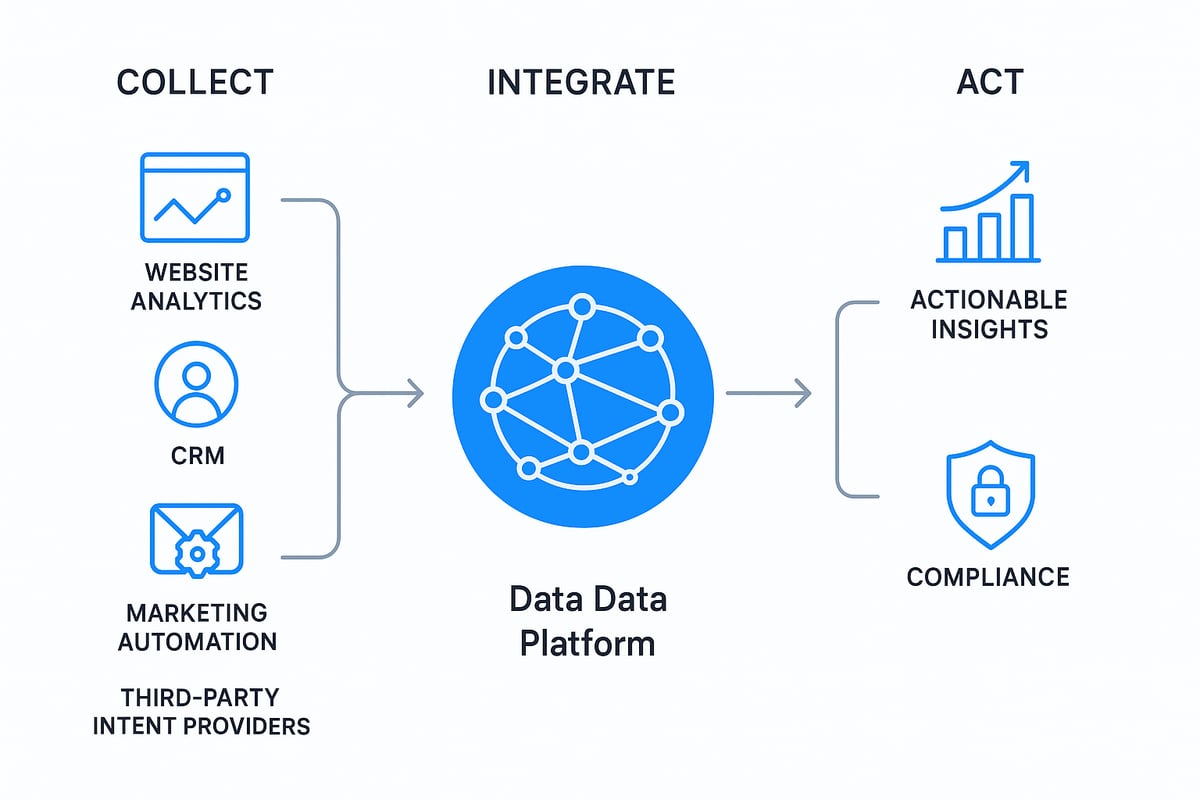
Effectively leveraging intent signals requires a strategic approach to data collection, integration, and action. Given the abundance of touchpoints and data sources, marketers require a unified process to transform raw signals into tangible business outcomes. The following practical framework can guide your team.
Building a Unified Intent Data Stack
In order to unlock the full potential of buying signals, organizations need a unified view of real buyer behavior. This begins with consolidating first-, second-, and third-party data into a single ecosystem that connects all relevant touchpoints. Website interactions, CRM records, marketing automation activity, and external intent data from publishers or review platforms must work together to create a comprehensive picture of account activity.
Customer data platforms (CDPs), modern CRM systems, and marketing automation tools are essential for achieving this. These platforms break down data silos and centralize insights, enabling teams to analyze intent signals across multiple channels. Solutions offering native integrations and pre-built connectors for common data sources can significantly simplify implementation and improve data consistency.
A unified tech stack enables more accurate segmentation, better lead prioritization, and stronger alignment between marketing and sales teams. However, integration requires careful planning. If left unmanaged, data quality issues, inconsistent identifiers, and fragmented sources can reduce reliability. Regular audits, validation processes, and clear data governance practices are essential to ensure teams can rely on generated insights.
Turning Signals into Actionable Insights
After centralizing signals, the next step is translating behavioral insights into decisions that drive pipeline growth.
Lead scoring models and AI-powered analytics can identify accounts demonstrating strong purchase intent. These systems can prioritize prospects or target accounts that are most likely to convert by analyzing engagement patterns, such as repeated product or pricing page visits, content downloads, or research activity.
Dynamic segmentation enables marketing teams to create campaigns based on actual behaviors rather than assumptions. For instance, a surge in content downloads could prompt a targeted nurture sequence, while high-value actions, such as demo requests or product comparisons, could trigger immediate sales outreach.
To maximize results, organizations should establish clear workflows that connect intent signals with specific actions. Continuous testing, monitoring, and collaboration between marketing and sales teams help refine these processes over time, ensuring that insights translate into a qualified pipeline and measurable revenue impact.
Privacy, Compliance, and Ethical Considerations
As intent data becomes a central component of modern marketing strategies, it is essential to maintain responsible data practices. Regulations such as the General Data Protection Regulation (GDPR) and the California Consumer Privacy Act (CCPA) require organizations to transparently collect and process behavioral data with explicit user consent.
Companies should clearly communicate how data is gathered and used while ensuring that all technology partners adhere to strict compliance and security standards. Implementing best practices, such as consent management systems, role-based access controls, and routine privacy audits, helps protect both customer data and organizational integrity.
Responsible data usage is a strategic advantage as well as a legal requirement. When handled ethically, intent signals can strengthen trust with prospects and enable more relevant, personalized marketing experiences. Prioritizing transparency and compliance helps organizations build a sustainable foundation for long-term, customer-centric growth.
Future-Proofing Your Marketing with Intent Signals
As digital ecosystems evolve, marketing strategies must adapt to rapid changes in technology, buyer expectations, and data availability. Organizations that incorporate intent signals into their decision-making processes can better anticipate demand, engage prospects at the right moment, and allocate resources more effectively.
Instead of reacting to market shifts after they occur, intent-driven marketing allows teams to identify emerging needs earlier in the buying process. This proactive approach helps companies maintain a competitive advantage, improve campaign performance, and increase long-term ROI.
Emerging Trends in Intent Data for 2026
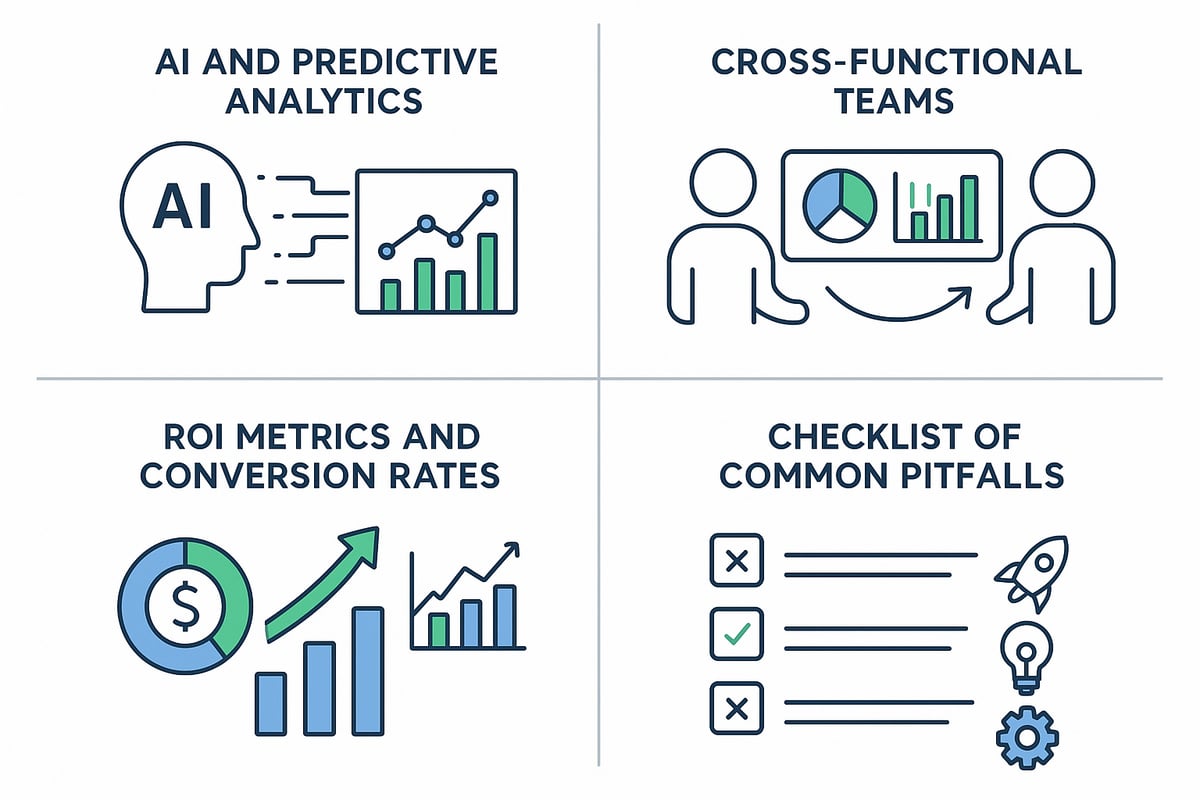
The capabilities of intent data are advancing quickly. Artificial intelligence and machine learning now enable marketers to analyze signals from a growing number of sources, such as voice searches, video engagement, community discussions, and connected devices. These technologies can identify patterns and predict buyer behavior long before prospects initiate direct contact.
At the same time, new tools are helping organizations uncover activity in previously opaque areas of the buyer’s journey, often referred to as the “dark funnel.” Interactions in private communities, messaging platforms, and peer networks are increasingly influencing purchase decisions, and modern intent data platforms are beginning to surface these insights.
Integrating Intent Signals Across the Revenue Team
Sharing intent signals across the entire revenue organization generates the greatest impact. Marketing, sales, and customer success teams all benefit from having visibility into the same behavioral insights.
Collaborative processes, such as shared dashboards, regular account reviews, and unified outreach playbooks, ensure consistent responses to potential buyer’s interest across teams. For instance, if marketing identifies a surge in research activity, sales can initiate targeted outreach, and customer success can prepare for potential onboarding needs.
When these teams work from a shared understanding of buyer intent, they can coordinate messaging, focus on the most promising accounts, and accelerate the pipeline. This alignment improves both customer experience and revenue outcomes.
Measuring ROI and Demonstrating Business Impact
Marketers need to connect behavioral signals directly to measurable outcomes to demonstrate the value of intent-driven strategies. Key performance indicators, such as conversion rates, deal size, pipeline velocity, and sales cycle length, offer insight into how intent-based information impacts revenue generation.
Advanced attribution models and closed-loop reporting further clarify which signals contribute most strongly to pipeline creation and deal progression. According to the 2026 State of Performance Marketing Report, organizations that focus on high-quality signals rather than inflated data points are better able to generate meaningful business results.
Regular reporting and cross-team communication help ensure that stakeholders understand the strategic value of intent data across the marketing and sales funnel.
Overcoming Common Pitfalls and Challenges
Despite its advantages, implementing an intent-driven strategy requires careful execution. One common pitfall is relying too heavily on a single signal or data source. Since buyer behavior is complex, meaningful insights typically emerge from analyzing multiple signals together.
Another challenge is maintaining data accuracy and relevance. Poor data hygiene, outdated information, and incomplete integrations can lead to misleading conclusions. Strong governance practices, including routine data audits and continuous team training, help maintain the reliability and accuracy of generated insights.
Successful organizations treat intent data as an evolving capability. Marketing teams can adapt as buyer behaviors and technologies change by continuously testing, learning, and refining their approach.
Conclusion
As we move further into 2026, companies will increasingly rely on the ability to identify and act on buyer intent to connect with potential clients. Intent signals provide the necessary insights to personalize campaigns, prioritize high-value prospects, and allocate marketing resources effectively.
However, translating these insights into tangible business outcomes often requires expertise and strategic support. Partnering with experienced agencies can help organizations transform complex data into practical marketing actions and scalable growth strategies. Sortlist is one platform that makes it easier to discover agencies with the expertise needed to leverage intent insights and build data-driven marketing initiatives tailored to your business goals.