Anonymous Website Visitor Tracking: The Complete 2026 Guide

Last update: 26 March 2026 at 03:02 pm
In 2026, you can’t afford to treat most of your website traffic as “unknowable.” Your analytics dashboard might show pageviews and bounce rate, but it won’t tell you which accounts are repeatedly hitting pricing, revisiting comparison pages, or showing the kind of intent your team should act on today.
Anonymous website visitor tracking now works by combining first party data from your site (events, page depth, return visits) with smarter visitor tracking tools that can track intent signals in real time, even when cookies are limited. Google Analytics is still useful for trends, but it’s not built to turn anonymous behavior into workflows your sales or client team can use.
This article shows you how to start this week, what a pixel can realistically reveal, which data sources and tools (including Radar for agencies) produce actionable insights, how to stay compliant, and a 30-day plan to turn anonymous tracking into revenue.
How to start anonymous website visitor tracking this week
Do you want actionable insights from your website traffic by next Monday without turning your site into a privacy nightmare?
You can get there fast by keeping anonymous website visitor tracking simple: pick one business outcome, track a small set of high-signal behaviors, and make sure your measurement leans on first party data instead of brittle third-party cookies. Tools like Radar are built for agencies that need visitor tracking to translate into pipeline conversations, not just prettier dashboards.
Pick one outcome to optimize (not 20 metrics)
Choose one outcome that a real person on your team can improve in a week, like “more demo requests” or “more qualified contact clicks.” When you anchor website visitor tracking to a single outcome, you stop chasing noisy traffic and start asking which pages and sequences create intent.
If you already live in google analytics, keep it as a baseline for aggregate trends, then layer anonymous behavior signals on top so you can act faster than a monthly report.
Track behavior with 8–12 high-signal events
Track fewer events and make each one decision-ready, because event sprawl kills trust in your data sources. Start with behaviors tied to evaluation, not curiosity.
After choosing the right data sources, you’ll want a tool that can unify them into clear, actionable insights—here are the best website tracking tools to consider.
- Pricing page view (and repeat views)
- Demo or “contact sales” click
- Form start vs. form submit (captures friction)
- Scroll depth on key pages (e.g., 50% and 90%)
- Video play on product walkthroughs
- Docs/FAQ search
- Case study view by industry
- Exit on checkout or booking step
Turn on first-party analytics and server-side collection
Use a first-party pixel plus server-side collection so you can track core events even when browsers limit cookies. Cometly specifically highlights capturing data directly from your server to avoid gaps caused by iOS privacy features and ad blockers, and that same principle applies to any stack you choose.
If your site runs on WordPress, bake implementation into one repeatable checklist so every client property is consistent; you can follow this guide to set up tracking in WordPress and then standardize your event names across projects.
Set up a weekly action loop so data changes decisions
Make the data earn its keep by tying it to a standing weekly decision, like “which page gets rewritten” or “which segment gets a new offer.” With Radar, agencies often route spikes in high-intent anonymous sessions to the right account owner so follow-up and on-site changes happen while interest is still fresh.
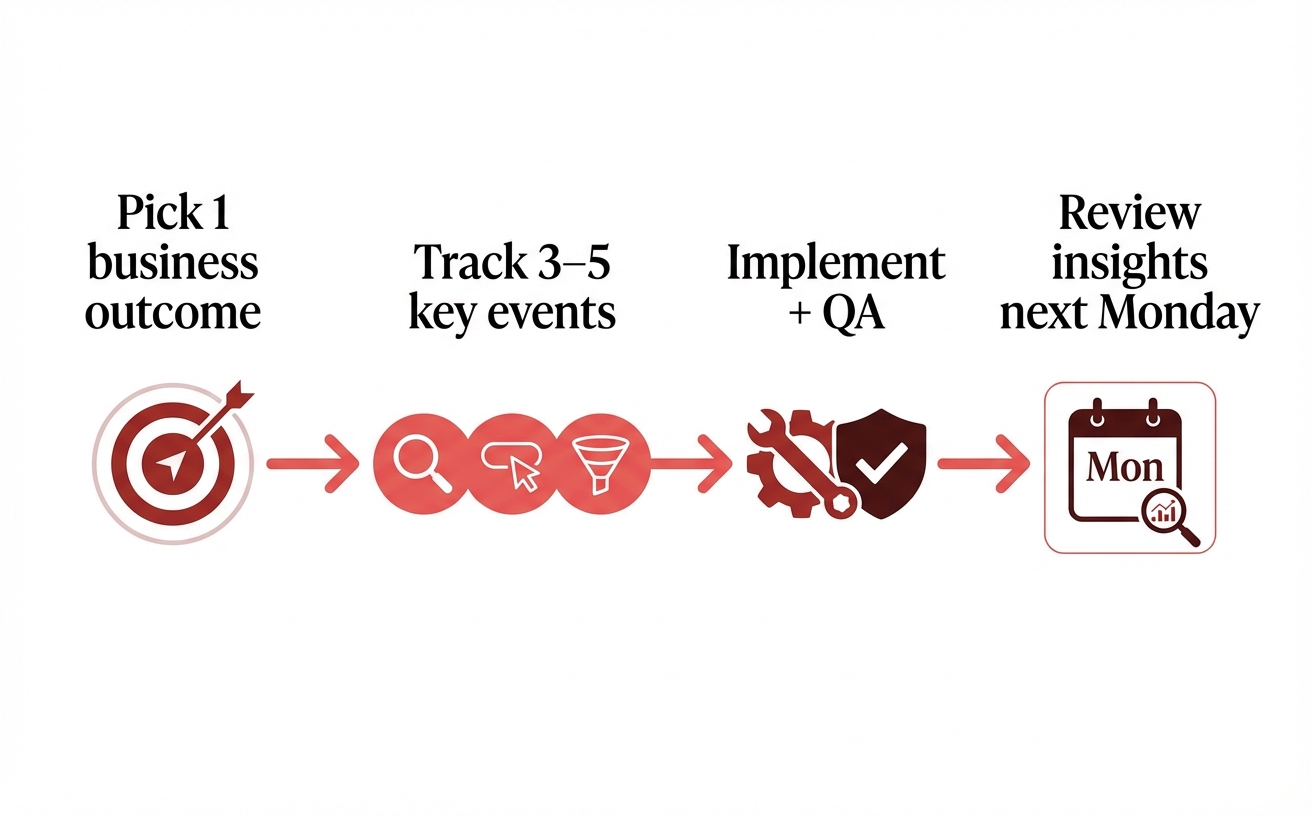
A 1-week starter plan for anonymous visitor tracking.
What you can (and can’t) learn without identifying people
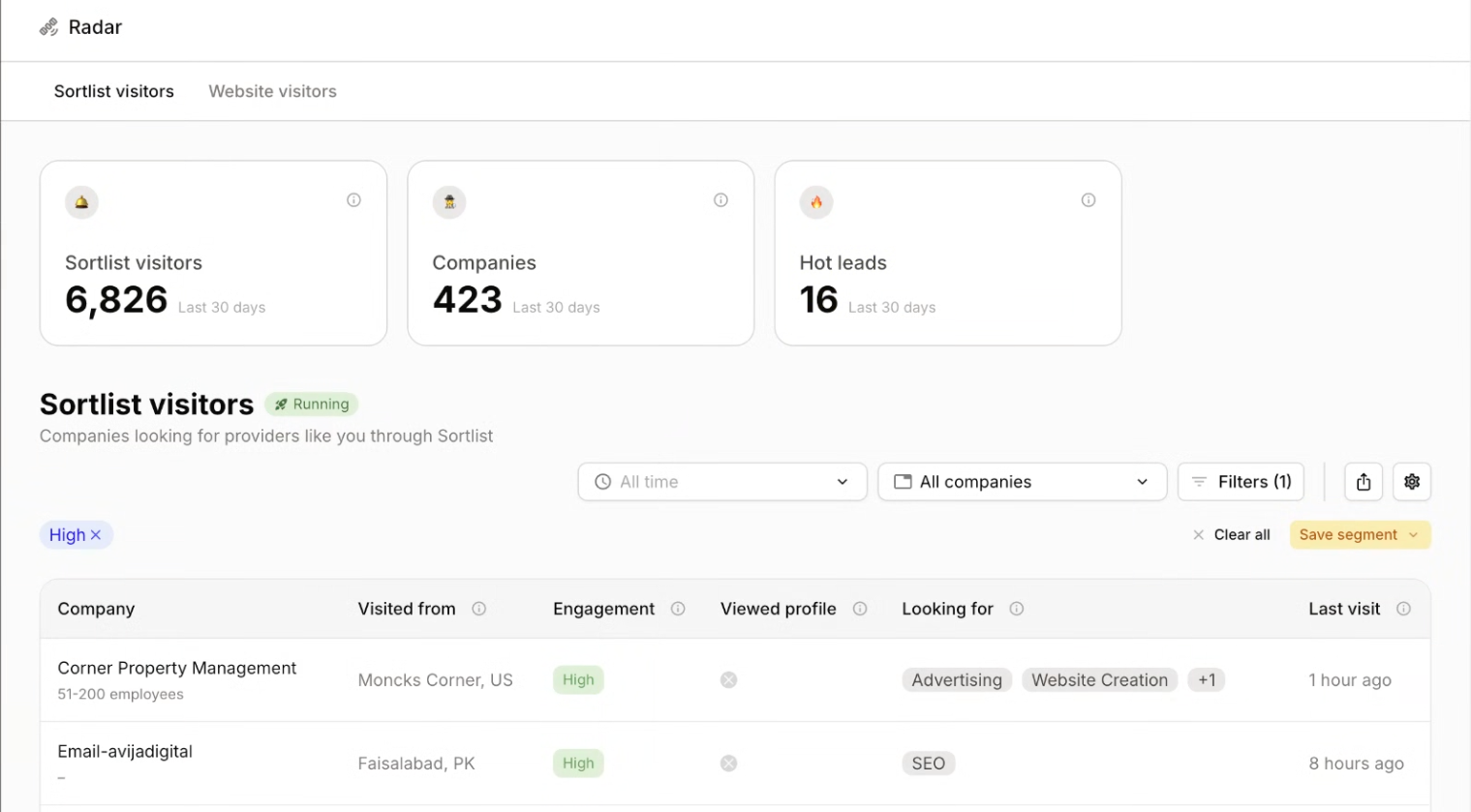
Anonymous website visitor tracking is for patterns and intent signals—not guaranteed person-level identity. You can still make sharp decisions from anonymous users when you treat each session as evidence of friction, curiosity, or buying intent. That’s where tools like Radar help agencies turn anonymous visitor behavior into an action queue, even when you can’t tie it to specific individuals.
Intent signals that actually predict action
High-intent signals show up as repeated, narrowing behavior across multiple sessions, not a single pageview. AI visitor intelligence tools increasingly score intent using 40+ behavioral signals per session and often find only about ~9% of sessions show strong buying intent—so you focus where intervention pays off. Treat intent data as “likelihood to convert,” not “who this is.”
- Pricing + comparison depth: long dwell time, scroll reversals, and repeat visits to plan pages
- Path tightening: blog → product → integrations → pricing (fewer detours each visit)
- Friction markers: rage clicks, repeated form errors, or looping between FAQ and checkout
Attribution you can trust when cookies are limited
Reliable attribution comes from first-party and server-side signals, not fragile third-party cookies. You can still trust channel-level and page-sequence attribution (e.g., “LinkedIn ad → integration page → demo start”) even if the anonymous visitor switches devices and looks “new.” You’ll get more mileage when you map events to outcomes and document the assumptions in your measurement plan alongside visitor identification strategies that you’ll only use when the user opts in.
Where “anonymous” becomes “identifiable” by accident
Identity can leak in when you join anonymous tracking data to identifiers you didn’t mean to collect. Common tripwires include embedding emails in URLs, logging full IP addresses with user-entered fields, or stitching sessions to a CRM record the moment a form is partially completed. Audit your pipelines so “anonymous website visitors” stays truly anonymous until a clear consent moment makes identification intentional.
Which tools and data sources make anonymous tracking useful
A SaaS agency I worked with kept “improving traffic” while demos stayed flat, until anonymous tracking showed most high-intent sessions hit pricing, then stalled on an integration page. The fix wasn’t more ads; it was cleaner first-party analytics, a handful of high-signal events, and just enough enrichment to route the right follow-up. The most reliable setup combines first-party analytics, lightweight event tracking, and enrichment that respects consent and data minimization.
Choose between web analytics, product analytics, and CDPs
You pick tools based on the decision you need to make, not on what looks impressive in a dashboard. Most teams end up with a small stack of best tools that covers:
- Web analytics (e.g., Google Analytics) to see aggregate funnels and where anonymous sessions drop.
- Product analytics to track event sequences (trial-start → activation) with consistent naming and properties.
- CDPs (e.g., Segment) to integrate events into your CRM or Salesforce without duplicating logic.
When to add reverse IP and firmographic enrichment (and when not to)
Reverse ip resolution is useful when you sell to companies visiting your site and you can act on firmographic data like industry and company size. EU-focused visitor identification platforms like Leadinfo report 35–40% company identification with a cookieless option, while tools like Leadpipe cite 30–40% person-level match rates on US traffic using deterministic matching against verified databases.
You skip enrichment when your funnel is self-serve B2C, when ip addresses are mostly consumer ISPs, or when you can’t operationalize alerts within minutes. Tools like Radar are practical here because you can keep the event layer simple and add enrichment only for segments that meet clear intent thresholds.
How to combine anonymous sessions with known users ethically
You merge anonymous sessions only at a clear consent moment, like a form submit, trial creation, or explicit email opt-in. Keep anonymous IDs separate from personal profiles until that moment, then backfill history in your CRM for context rather than covert identification. If you do use person-level matching, prioritize systems that can activate responsibly (e.g., Untitled supports identity resolution plus email and paid media activation) and document what fields you store and why.
Dashboards that force action instead of vanity metrics
Your dashboard should answer “what do I do this week?” not “how many visitors came?” Add alerts tied to intent signals (pricing views, return visits, key page sequences), and route them to Slack for fast response—Warmly highlights teams seeing 3–5x return when they set real-time Slack notifications on warm visitors. If your site architecture changes often—especially when deciding between dynamic vs static sites—version your events so trend lines stay comparable instead of resetting every redesign.
| See Anonymous Visitors with Radar NowRadar helps agencies identify and qualify anonymous website traffic so you can spot high-intent accounts and turn visits into pipeline-ready insights.Explore Radar → |
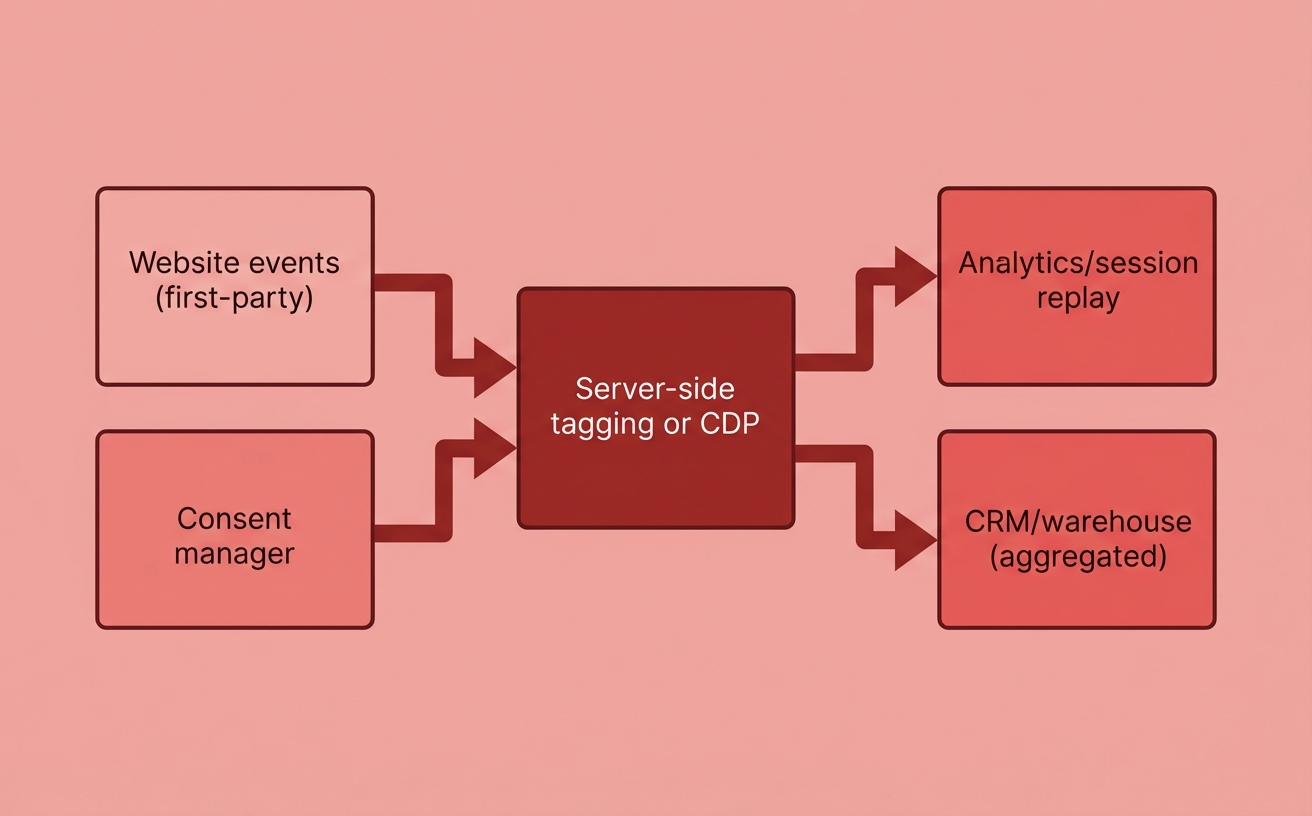
How tools and data sources combine to make anonymous tracking actionable.
How to stay compliant while tracking anonymous visitors
Start by writing down what you need to measure and delete everything else from your tracking plan. You reduce legal and reputational risk by minimizing the data you capture, honoring consent signals, and documenting why each event is processed. When you treat privacy and compliance as product requirements (not legal cleanup), your measurement stays stable even as device ids and browser rules change.
If you’re an agency, tools like Radar help you turn anonymous traffic into actionable insights while keeping the focus on high-intent behavior instead of collecting extra identifiers “just in case.” That mindset also makes it easier to defend your choices with clients and vendors when questions about data privacy come up.
Consent management that doesn’t destroy measurement
Use consent to control activation first, not basic measurement. You can often measure anonymous, aggregated site performance while restricting anything that creates cross-site profiles or exports audiences to ad platforms until the visitor opts in. If you add reverse IP and firmographic enrichment, keep it company-level where possible and document your lawful basis, especially when ip addresses are involved.
Data minimization: what to stop collecting immediately
Stop collecting high-risk fields that don’t improve decisions, because they increase breach impact and compliance workload. As a default, avoid capturing:
- Full IP addresses stored in raw logs longer than necessary
- Persistent device ids or fingerprinting-style attributes
- Free-text form fields inside analytics events (they often contain personal data)
- Exact URLs that include emails, tokens, or query-string identifiers
Retention, access controls, and audit trails you’ll wish you had
Set a retention window per data type, then enforce it automatically so old data is deleted instead of “archived forever.” Limit access by role (marketing, analytics, client, vendor) and require approvals for exports into CRMs and ad accounts. Keep an audit trail of what was captured, where it was sent, and who changed the settings; with Radar, agencies often operationalize this by standardizing client workspaces and permissions so access is consistent across accounts.
Copy and UX patterns that earn opt-in
Earn opt-in by telling people what they get, not just what you take. Use plain-language consent copy that names categories (“analytics,” “personalization,” “marketing”) and matches what you actually do with the data. Add an easy-to-find “privacy choices” control and honor opt signals immediately across all vendors, including any enrichment providers that process ip addresses.
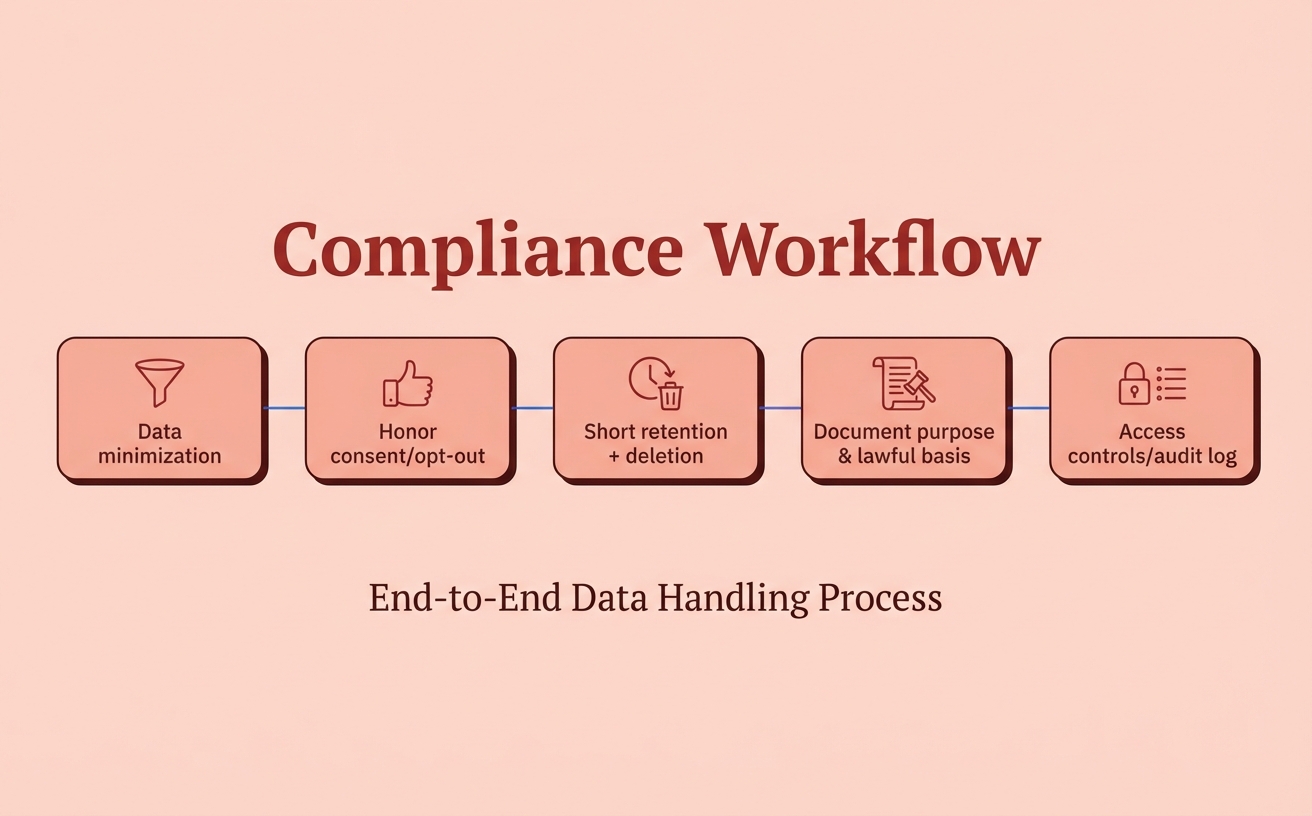
A practical compliance workflow for anonymous visitor tracking.
A 30-day playbook to turn anonymous tracking into revenue
Are you using anonymous behavior data to actually change what happens in your funnel, or are you just collecting it “because analytics”? The fastest ROI comes from fixing conversion leaks, shipping tailored messaging, and prioritizing sales outreach, then validating the impact with disciplined experiments. When you treat tracking as a decision system (not a dashboard), you create more pipeline and more predictable closed revenue.
Days 1–7: validate tracking, define baselines, and kill noise
Start by proving your signals are trustworthy, because bad data creates bad decisions. Pick one baseline (like pricing page-to-demo conversions) and make every metric serve that outcome; with tools like Radar, you can sanity-check key paths and set up real time alerts for sudden drops.
- Validate 8–12 high-signal events (pricing page view, form start, form submit, checkout start, chat open).
- De-duplicate events across tags, server-side tracking, and CDP streams to kill double counting.
- Segment internal traffic, bots, and QA sessions so your baseline doesn’t lie.
- Set email alerts when conversions dip below a threshold you’ll actually act on.
Days 8–15: find the top 3 conversion blockers and fix them
Focus on the three blockers that affect the most sessions on high intent pages, especially your pricing page. Fix one UX issue (confusing plan table), one trust issue (missing proof near CTA), and one speed issue (slow form step), then re-measure conversions within 48–72 hours.
Days 16–23: build segments for personalization and outreach
Turn behavior into segments you can deploy, not just observe; if you use a website chatbot on high intent visitors who loop on pricing, you can answer objections before they bounce. With Radar, agencies can map these segments to lead scoring, trigger workflows, and tailored campaigns without needing to identify every person. You can also test tools like, OverloopAI or Lemlist for sales prospecting automation.
Days 24–30: run experiments and set ongoing governance
Run two experiments that directly support revenue (CTA copy vs. CTA placement, pricing layout A/B) and require a pre-registered success metric. Lock in governance: retention limits, access controls, and a weekly review where the sales team uses intent signals for tailored outreach—supported by alerts, not guesswork.
| Turn Traffic Into Pipeline with RadarNow that you know how anonymous website visitor tracking works, use Radar to reveal who’s visiting, prioritize best-fit accounts, and act on insights in your next campaign.Get Started → |
What to do next with anonymous tracking
Anonymous visitor tracking works in 2026 when you keep it goal-driven and first-party. Pick one outcome (like more demo requests), track a small set of events, and use first-party measurement so your data stays resilient and privacy-safe.
Use anonymity to spot patterns, not to “identify” people. Treat the data as intent signals and friction detectors, then improve pages, messaging, and routing—and confirm wins with experiments instead of assumptions.
Reduce risk by collecting less and documenting more. Minimize data, honor consent signals, and write down why each event exists so you can defend decisions and simplify audits.