


The Rebranding Guide: a no-fluff blueprint to getting it done

Last update: 1 March 2025 at 04:34 pm
Rebranding is a high-stakes transformation that can be the bedrock of your growth for a decade.
Done right, it aligns your entire team, sharpens your positioning, and makes every marketing dollar work harder. Done wrong? It confuses customers, kills brand trust, and burns through time and money with nothing to show for it.
So how do you get it right?
This is the behind-the-scenes look at what it really takes to pull off a successful rebrand, based on data from 40,000 branding projects on the Sortlist platform and from interviews with four expert branding agencies: Rload Studio, CRU Brand Consultancy, Nemesis and Designlaboratory.
They’ve worked on more than 700 branding projects since 2020 for companies worldwide, and have 20 marketing and design awards to back up their expertise.
────────────────────
Whether you’re tackling it in-house or outsourcing to an agency (hint: the best brands don’t do it alone), we’ll break down:
- How to align your team and prove that a rebrand is a business decision, not a vanity project.
- The layers of a rebrand (strategy, identity, and activation) and the skills you need to get it done.
- How companies turn to agencies instead of struggling with an internal overhaul.
- What rebrands really cost, from hybrid efforts to full-service agency solutions.
If you’re considering a rebrand, this is your roadmap lifting the lid on the process so you can execute with clarity, avoid costly mistakes, and ensure your brand emerges stronger.
Let’s get into it 👇
The hardest part of a rebrand? Convincing your own team
The hardest part of a rebrand sometimes isn’t the positioning, or the design. It’s getting your fellow stakeholders to agree you need one before it’s too late.
Maybe your brand feels outdated. Maybe your messaging is all over the place. Maybe customers don’t “get” what makes you different. You see the problem, but does the rest of your team?
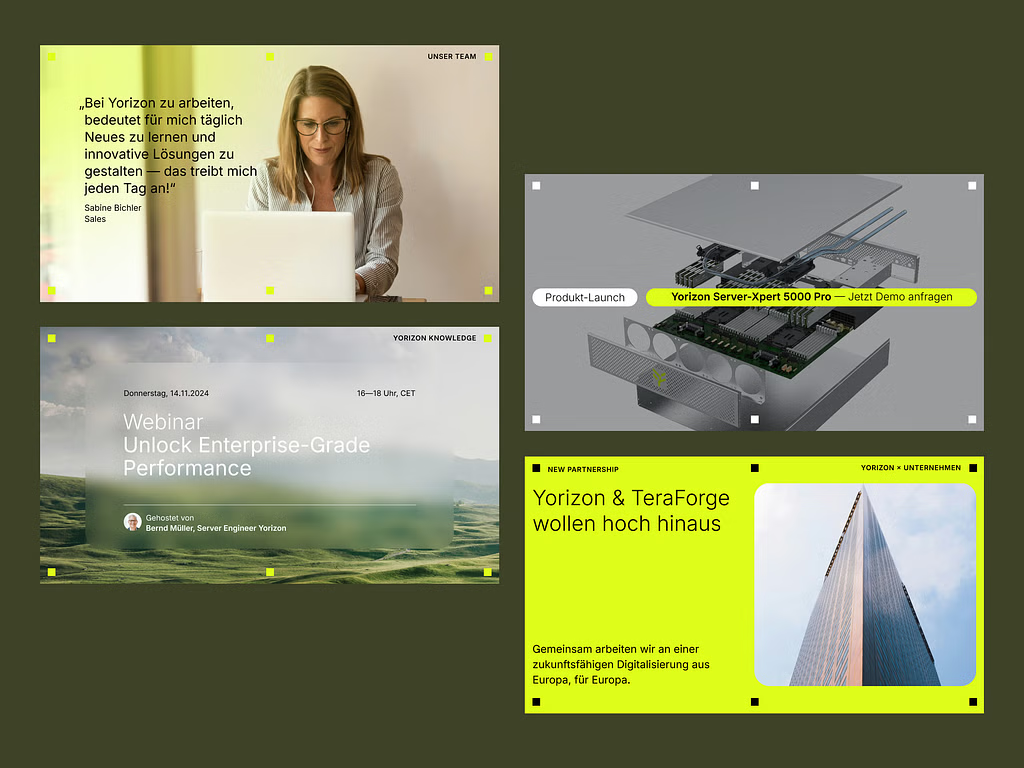
What your current brand might be costing you every day
A common misconception is that branding means pretty colours and logos. But a weak brand isn’t neutral – it actively costs money every day.
A brand is about crystal clear messaging. First it should bring internal clarity about your purpose, and give the tools to align every employee around that vision so they pull in the same direction.
Then it offers another set of tools to communicate that purpose to your customers.
So a rebrand is a business decision focused on making the organization more efficient on every level. And like ignoring a crack in your foundation, ignoring branding problems can end up costing you more the longer you leave it.

“You really want to educate your clients about that misconception between marketing, design, advertising, and branding. Back in the days, marketing came before design and strategy, which obviously meant it was a mess.”
–Boris Thuery, cofounder and CEO of Designlaboratory
Here’s what’s happening under the surface of a weak brand:
- Your team is misaligned. Without clear positioning, departments pull in different directions.
- Marketing spend is wasted. You’re targeting the wrong audience with the wrong message.
- Your sales funnel leaks. Customers don’t understand your value, so they drop off.
- Your competitors look sharper. If they evolve and you don’t, you risk fading into the background.
Warning signs you’re already behind
We’ve already spoken to CRU Brand Consultancy, Designlaboratory, and Rload Studio about the red flags that you need a brand refresh in detail, but if you’re dealing with more than one of these, a rebrand isn’t just an option – it’s overdue:
- Your brand feels off. If it doesn’t feel right to you, trust that instinct.
- Your ideal customer has changed but your brand hasn’t. You may be attracting the wrong audience.
- Customers drop off before buying. Your brand might not be building enough trust.
- Internal vs. external perception doesn’t match. If your team describes your brand one way and customers see it differently, you have a credibility problem.
- Competitors look fresher and more relevant. If they’ve evolved and you haven’t, you’re falling behind.
What skills are needed to rebrand?
You’ve recognized the need to rebrand. You’ve got your team on board. Now comes the real challenge: pulling it off. And that takes the right mix of skills. Whether you’re tackling it in-house or bringing in an agency, here’s what it takes:
The three layers of a rebrand and the skills needed
Brand strategy → The foundation of everything
Before you even touch design, you need a rock-solid strategy. This is the part that aligns and defines the company internally on exactly who you are, who you serve, and how you stand out. Then take the strategic foundation and turn it into words that connect and persuade.
🧠 Key role: Brand Strategist → Defines your position in the market.
- Researches your market, competitors, and customer behavior to find your edge.
- Sharpens your positioning and audience definition so your brand is built on clarity, not guesswork.
- Develops tools and communications (like brand frameworks) to keep the entire company aligned.
✍️ Key role: Copywriter & Messaging Specialist → Shapes your brand’s voice and value proposition.
- Defines tone of voice, so your brand sounds distinct and recognizable.
- Crafts taglines, brand pillars, and messaging frameworks that make your positioning stick.
- Writes high-converting website and marketing copy that turns visitors into customers.

“You need the basics, basics like somebody who can design, who can think strategically, and also have the logic of a UX designer and speak to the target group.”
–Lasse Giese, cofounder of CRU Brand Consultancy
Visual identity → Logo, typography, colors, website
If strategy is the foundation, your visual identity is what lives above the surface – the first thing people see. Like copywriting, it needs to be instantly recognizable, differentiated, and built to last.
🎨 Key role: Visual Identity Designer → Creates a brand that looks as good as it performs.
- Designs logos, typography, and colour palettes that align with your positioning.
- Builds a brand design system that ensures consistency across every touchpoint.
- Designs digital and physical assets (websites, business cards, packaging, ads, etc.).
────────────────────
Market activation → Website & assets relaunch, content, ads, PR
A rebrand isn’t complete when the logo is finalized or the website is redesigned. It’s complete when your market recognizes it, trusts it, and takes action.
Market activation is where strategy and identity turn into real-world impact, and involves multiple disciplines working in sync to drive awareness, engagement, and adoption. This is the phase of a rebrand most commonly handled in-house.
💻 Key role: Website & UX Designer → Ensures your site looks great and converts visitors.
- Makes sure the new branding is seamlessly integrated into the website’s look and feel.
- Improves navigation, structure, and flow to guide visitors toward conversion.
- Collaborates with brand strategists, visual designers, and copywriters to make sure every word, image, and interaction supports the brand’s message.
📢 Key role: Marketing Strategist → Ensures your rebrand doesn’t go unnoticed.
- Planning the full rebrand rollout across digital, paid media, and PR.
- Running social, search, and display ads to announce the rebrand.
- Keeping customers and prospects informed and engaged throughout the transition through email and product marketing.

Can it be done in-house?
The short answer? No, not well.
Some companies think they can DIY a rebrand to “save money.” But in reality, in-house rebrands often cost more in time, effort, and lost opportunities.
What can work is a hybrid rebrand where an agency handles the strategy and in-house teams take on execution (design, rollout, or both). More on that later.
But even the biggest companies still hire agencies for strategy. Why?
Because when a team is too close to the brand, they struggle to see it objectively. Without fresh perspective, internal teams risk polishing the old brand instead of creating something truly differentiated. You can’t fix blind spots from the inside.
────────────────────
Most companies will work with a vetted branding agency for:
- Speed & efficiency: in-house teams take months to build and align. Agencies move fast and get it right the first time.
- Objectivity: external teams see your brand the way your audience does, without bias.
- Cohesion: strategy, design, and messaging need to work together seamlessly. Agencies ensure alignment from day one.
- Lower risk, higher ROI: a bad rebrand kills credibility (Tropicana lost $30M in weeks). A great one drives growth (Airbnb’s rebrand fuelled global expansion).
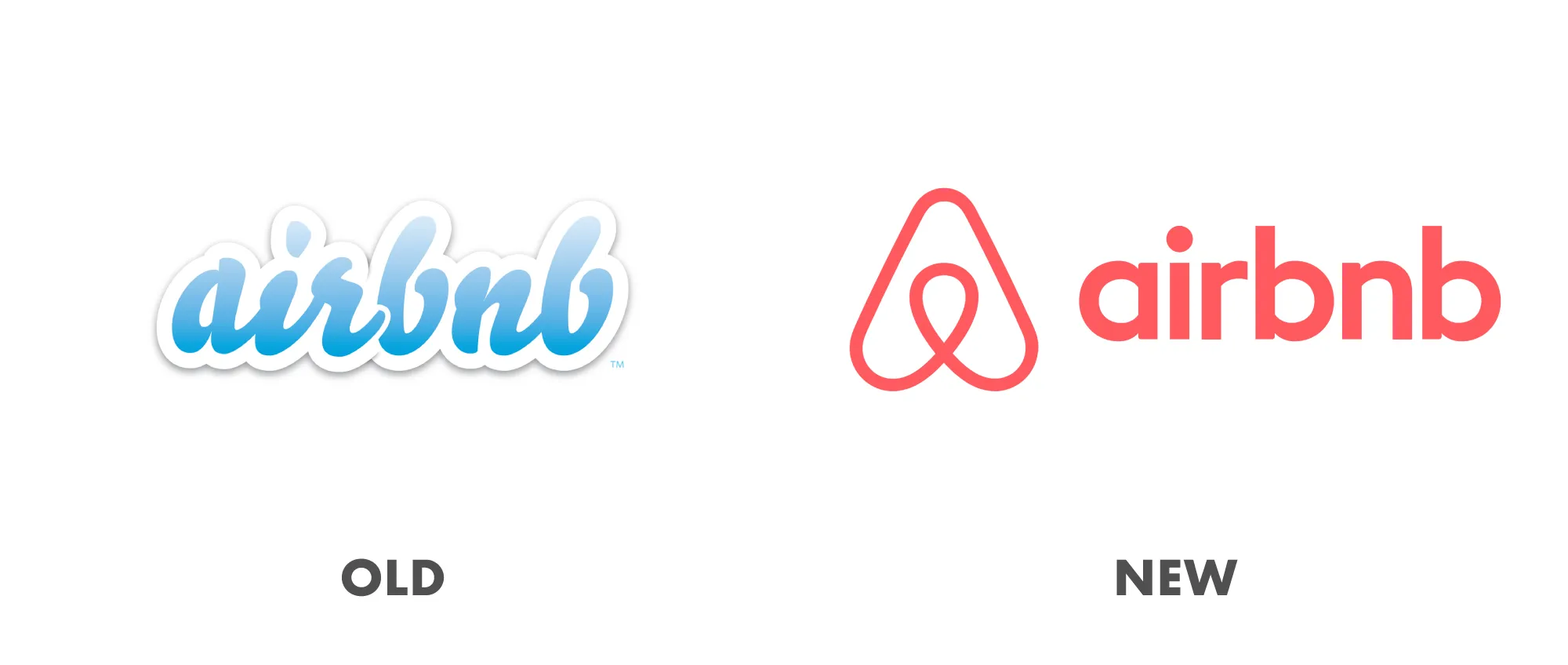
The stakes are high. Get it right, and your business thrives. Get it wrong, and you confuse customers, burn marketing dollars, and lose momentum.
Working with professionals who understand the intricacies of a rebrand and have done it every day for years lowers the risk of that second outcome.
That’s why almost no companies go it alone.
The power of a hybrid approach
That said, while almost no companies go it alone, a hybrid approach is very common, where the company will handle one or more elements themselves – likely the rollout phases of the rebrand.
The approaches can be put into three distinct buckets: 360, hybrid, and “multiple provider.”

“Companies thinking about rebranding should prioritize it. We need the client to be involved, participate, and be agile to review the progress of the project and give constructive feedback. Therefore, the question is if they are open to a real change, not only at a visual level, but also in terms of culture and business organization.”
–Bea Carballo, cofounder of Rload Studio
The 360° agency approach: best for fast, high-impact rebrands
A single agency manages everything: from positioning and messaging to visual identity, website rollout, and market activation. This ensures cohesion, speed, and a single point of accountability.
This is best for businesses that want a turnkey solution with minimal internal coordination.
- Who typically chooses this? Scale-ups, fast-growing startups, and larger companies without the skills in-house that need to get it right first time, and fast.
- Key advantages:
- Consistency. No gaps between strategy and execution.
- Speed of rollout.
The hybrid approach: best for companies with strong internal teams
Here, a branding agency defines strategy and guidelines, while your internal team executes the new identity across different touchpoints.
This is best for companies with in-house designers, developers, or marketers who can implement changes but need expert direction.
- Who typically chooses this? Mid-sized and large companies with mature design and marketing teams, but lacking brand strategy expertise.
- Key advantages: granular control over execution, internalization of brand strategy during application, but benefiting from external strategy expertise.
The “multiple provider” approach: for budget-conscious companies with strong project management
Instead of one agency, you could work with a brand strategy agency, a design agency, a website development agency, and a marketing agency. The challenge? Alignment and consistency.
This is best for companies with tight budgets and strong internal coordination.
- Who typically chooses this? Startups and small businesses with experience managing external vendors.
- Key risk:inconsistency. Without clear brand guidelines, your messaging and visuals may feel disconnected.

How much should you budget for a rebrand?
When it comes to branding, there’s a massive gap between what companies expect to pay and what a rebrand actually costs.
Thanks to data from thousands of branding projects, we can break down what companies budget at the start and what they end up investing, once they realize what it takes to get it right.
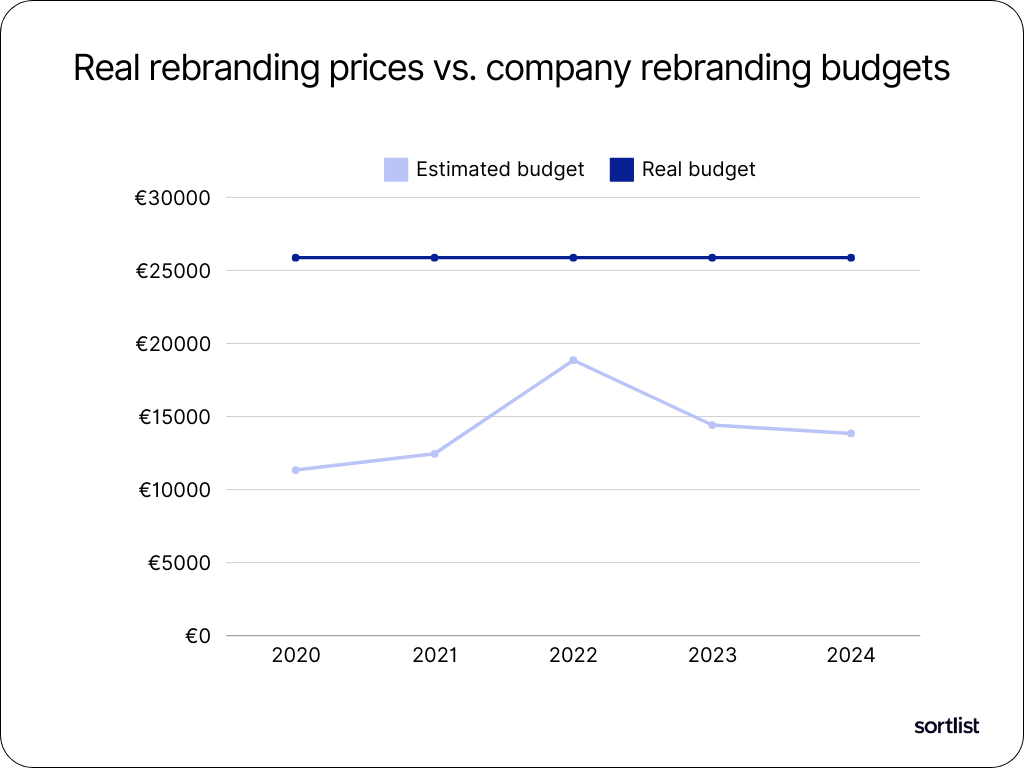
And it’s normal that business leaders often aren’t quite sure. It’s an exercise you might only do once per decade, and the final price depends on a few key factors:
- How much work is done in-house -> It costs more to have an agency managing from A-Z than just delivering strategy.
- Scope of work → A full rebrand (strategy, identity, website, messaging) costs significantly more than just a logo refresh.
- Experience level of providers → Freelancers and small studios are cheaper but can lack the strategic depth of specialized agencies.
- Market complexity → Rebranding a local business is simpler (and cheaper) than repositioning a company for a global audience.
- Geography -> Rebranding a business in Germany costs more than it does in Morocco. That’s due to costs of living.
Nonetheless, benchmarks are useful to understand what ranges you might be working in, so you can start to flesh out a budget for your own rebrand.

Real-world costs from agencies: what brands actually pay (and why)
Different agencies charge different prices. And they’re not random markups; it’s all due to the depth of work involved. Here’s what you can expect:
────────────────────
Designlaboratory (UK) → Starting at $40,000 for brand & website
A branding package with a simple website can cost $25,000 to $40,000 for brand identity and $15,000 to $35,000 for web development.
Why? Complexity matters. A streamlined startup brand is one thing; a brand overhaul for a global company is another.
────────────────────
CRU (Germany) → $50,000 for a scalable, future-proof brand
CRU focuses on rebrands that last 5 to 10 years without needing major changes. Their pricing starts at $50,000, but large-scale rebrands go up to $250,000.
Why? A brand built to scale is an upfront investment that saves you from rebranding again in two years.
────────────────────
Rload Studio (Spain) → $20,000 for a complete rebrand
Includes strategy, workshops, mission & values, visual identity, UX/UI design, and web development.
Why? They streamline the process by offering an all-in-one package, keeping costs lower without sacrificing depth.
────────────────────
Nemesis (Belgium) → $50,000 for a full rebrand
Their pricing is based on company size, internal impact, and number of touchpoints.
Why? A rebrand for a 30-person company with one website is vastly different from a 1,000-employee firm with global locations.
────────────────────
In the end, while these benchmarks may be useful, your investment depends on strategy depth, execution complexity, and how future-proof you need your brand to be.
How to find the right agency for your rebrand
We’ve seen that no serious company rebrands without an agency. The stakes are too high. Get it wrong, and you confuse customers, weaken your positioning, and waste time and money.
That’s why choosing the right agency to support you is critical.
With thousands of options, how do you know who to trust? That’s exactly why Sortlist exists.
- Find the best fit, fast. Filter, search, and compare agencies based on real reviews, portfolios, and expertise.
- Mitigate risk. See proven track records before making a commitment.
- Confidence in every choice. Whether you need full-service or a hybrid approach, Sortlist helps you connect with vetted agencies that match your vision.
If you’re ready for a rebrand, then you’re ready to explore the directory of vetted branding agencies.
Browse through vetted providers that will give your brand the refresh it needs.


