

How To Set Up Email Campaigns That Generate Results

 5.00/5
Email marketing still remains a high ROI channel in digital marketing. For every $1 spent on email marketing, businesses see an average return of $36 – $40, an amount that paid search, paid social, influencer marketing, and even consistent SEO can’t guarantee.
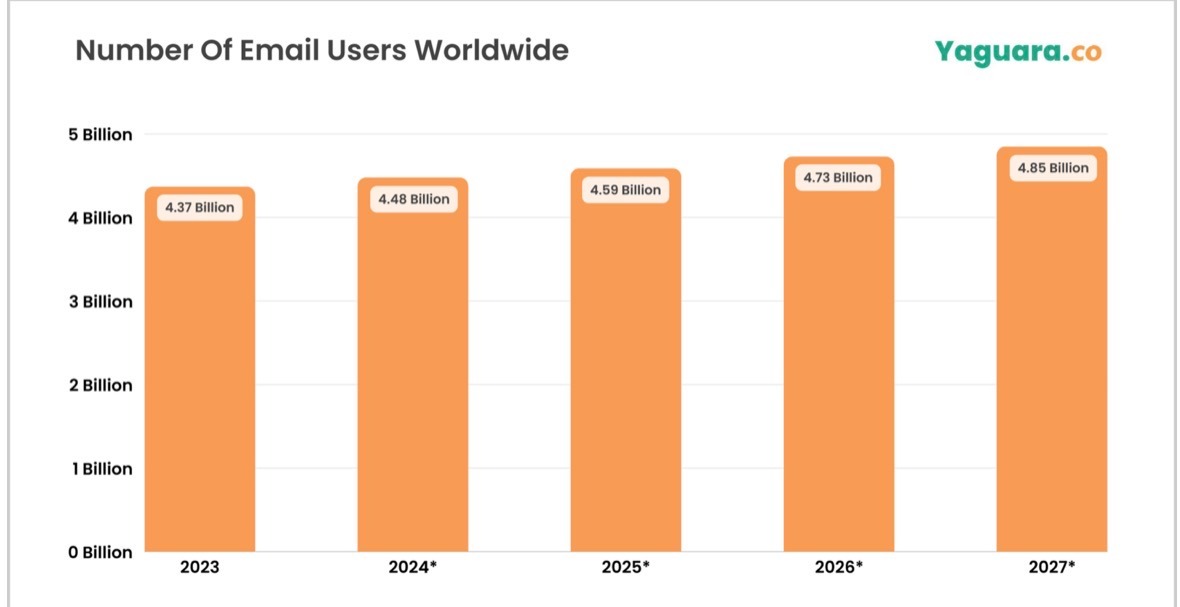
As of 2026, there are about 4.73 billion email users globally, and that number is projected to hit 4.85 billion by 2027.
As lucrative as email marketing is, small businesses and marketing agencies struggle with it. They make the same mistake, which is treating email as a broadcast tool, which often involves building email lists, pushing promotions occasionally, and wondering why they get poor results.
No clear goal, strategy, segmentation, just a bunch of texts, images, and links landing in the inbox of their target audience.
Businesses that make six figures from email campaigns aren’t just sending more emails. They are sending smarter and personalized emails to a target audience at the right time and with the right message, which sounds convincing for them to take a desired action.
In this guide, we’ll walk you through how to set up email campaigns that will generate leads and sales for your business.
You’ll learn how to:
- Build a quality and targeted list
- Choose the right email marketing platform
- Segment your audience
- Write emails people will open, read, and take action
- Automate emails without losing personal touch
- Track and measure results to see what’s working and what isn’t.
Whether you’re a marketing agency running email campaigns for clients or a small business owner managing your own email campaigns, this guide will teach you all you need to do to turn email campaigns into a consistent revenue driver.
1. Start With Clear Goals
What’s the email campaign trying to achieve? This is the first question you should ask yourself and answer clearly, even before you choose an email marketing platform, design a template, create an email, or even write an email subject line.
Most email campaigns fail even before you hit the send button, not because of bad copy or design, but because nobody defined the objective.
This is where strategy becomes the foundation. An email marketing strategy isn’t an email calendar, hacks, or tricks to get users to click a link.
It’s a broad plan that includes all you want to achieve and how you plan to achieve it. Think of it as the “why” that gives every email a purpose.
Know your goals and objectives. Both look similar, but there are differences. A goal is an outcome you are working towards. It can be to increase customer retention, boost brand awareness, or grow revenue from existing customers.
An objective is a specific and measurable milestone that serves the larger goal. It can be to increase CTR from 3% to 5% within 60 days, achieve 40% open rate on the next email campaign, or grow the email list by 1000 qualified subscribers in the next 2 months.
Without a clear objective, your marketing efforts become a waste, and it becomes hard to achieve your goal. Without a goal, your objectives lack direction.
2. Build a High Quality Email List
The backbone of every successful email campaign is the email list. You can have a convincing copy, a catchy email subject line, helpful email content, and a valuable offer, but if the email goes to the wrong audience, it’s as good as a waste of time. This is why building a high-quality email list matters.
Avoid using shortcuts like buying an email list or other shady tactics to build your list. It may look fast in the beginning, but it will get you no results in the long run.
Always build your list ethically.
Ethical list building creates stronger engagement because people join with genuine interest. As Rachel Sinclair, Acquisitions Director at US Gold and Coin, notes, “A smaller list with genuine intent usually outperforms a larger list built without trust.”
Set up a business website, and write blog posts on the problems your business solves. Offer lead magnets like free ebooks, checklists, or free consultations in exchange for your audience’s email address.
Have an exit pop-up on your website so your audience who are about to hit the back button can see your freebies, opt in with their email address, and grab their own copy.
If your business has a huge following on social media, integrate your email list on your accounts by simply sharing your email sign-up links so your audience who enjoys your content on Facebook, Instagram, LinkedIn, and X can join your email list.
While you build email lists, don’t forget to keep them clean and lean. Flag and remove inactive subscribers who haven’t engaged with your email in the last 6 months.
They are a low-quality audience who hurt your email delivery rate and also increase your monthly email platform subscription fee.
3. Choose a Suitable Email Marketing Platform
Once you have a strategy for building your email list, the next step is to choose a suitable and reliable email marketing platform.
Your email marketing tool isn’t just a software, it’s an engine that powers everything from designing a template, building email lists, setting up autoresponders, to automation, testing, and reporting. Making a wrong choice will limit your ability to set up an email campaign that will generate a desired result.
There are a lot of email marketing platforms out there with advanced and easy-to-use features. Choosing one depends on the needs of your small business or marketing agency. As Brandy Hastings, SEO Strategist at SmartSites, explains, “A strong platform should make it easy to react to audience behavior, not just send emails on schedule.”
As someone who has set up email marketing campaigns that generate leads and sales, below are what to look for in any platform.
Automation: Ability to send triggered emails based on target audience behavior. This includes a welcome sequence when a new audience joins, a follow-up email when someone clicks a link, and a re-engagement email when an active audience goes quiet for a while. You don’t need an email platform that doesn’t support automated campaigns.
Segmentation: The email platform should let you segment email lists into target groups based on behavior, purchase history, and demographics.
Ease of Use: Go for email marketing platforms you can navigate easily, use a drag and drop builder to design emails, and analyse reports in minutes.
Deliverability: This is key. Aim for email marketing platforms with 99% deliverability rate. You don’t want most of your emails to land in the spam box of your audience.
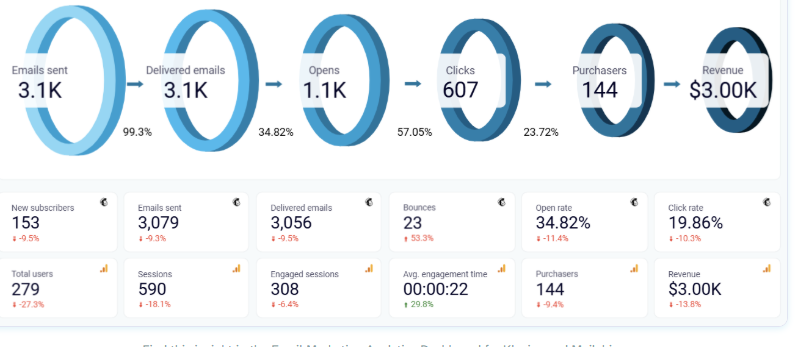
Analytics and Reporting: You see how your email campaigns are performing so as to know where to improve. Look for simple and clear reporting on click-through rate, open rate, conversion rate, and other key metrics that matter in email marketing.
GetResponse, Mailchimp, ConvertKit, ActiveCampaign, and Klaviyo are major email marketing platforms suitable for small businesses and marketing agencies.
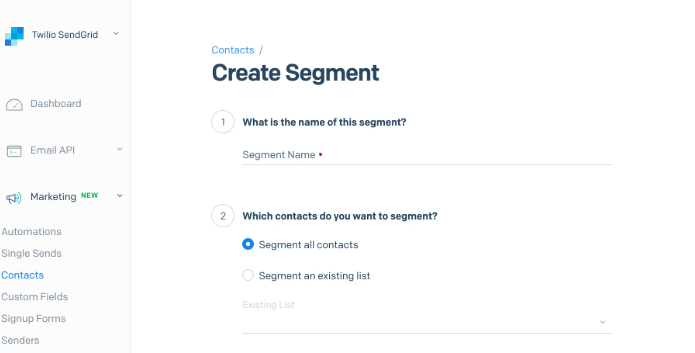
They offer all the features listed above.
4. Know Your Target Audience ( List Segmentation)
Not everyone who joins your email list is your target audience. This is why you must segment your list into specific groups so you can communicate with users who are interested in the products and services you sell.
Sending generic emails is a turn-off and could even make your buyer persona unsubscribe. Segmentation improves relevance because it allows you to match your message to where each subscriber is in their journey. As Karina Simonovic, Marketing Manager at Optimal Warranty, explains, “The more closely an email reflects a subscriber’s actual interest, the better the response tends to be.”
Segmenting your email list is simple. Look at your business, audience, and data available to you. Check for the behavior of a user since they joined your email list.
Have they downloaded your freebies, visited your pricing or consulting page, or performed other actions that are directly related to the goal you want to achieve with them?
This tells if they are qualified and potential leads to focus on.
When launching promotional emails, the more your audience is defined, the more your targeted emails become a conversation that can lead to them taking a desired action.
5. Understand The Types of Email Campaign
Before you launch email campaigns, understand what each is meant to accomplish and when to deploy them.
Think of email campaigns as less of a mere communication but a system designed to move a subscriber to a repeat and loyal customer.
Here are Core Email Campaigns:
Welcome Emails: This is the first impression you make, and it carries more weight than businesses think. It must show, within seconds of the user opening and reading them, that you understand their pain points and have a solution to them.
Newsletter: Use this to build relationships with your audience so they can trust you and become convinced of everything you tell them in emails.
Promotional Campaigns: These are marketing emails and your direct revenue drivers. You introduce them when you have built relationships with your audience. It involves new product launches, seasonal sales, exclusive discounts, etc.
Re-engagement Emails: Your active customers and subscribers will go quiet at some point. Re-engagement email campaigns win them back. It shows you care about them and the business relationship you have built with them.
Educational Series: This type of campaign educates your audience and positions you as a go-to source for a topic. It’s also a way of increasing brand awareness and growing your brand’s personality.
And beyond building individual email campaigns, effective email programs are built on automated sequences.
They are planned email series that go out based on subscribers’ behavior and timing.
Here are 5 sequences that matter:
Welcome sequence – send instantly after new subscribers opt into your email list.
Nurture sequence – send every 3 – 5 days. They warm and encourage subscribers to take desired action.
Cart recovery sequence – send it 2 – 3 hours after a user starts a purchase journey. Use it to draw the attention of a user to complete a purchase.
Post purchase sequence – send 7 days after a user makes a purchase. It builds customer relationships and gives you feedback on how helpful your product or service has been. It can also get you a positive review that you can use in your promotional campaigns.
6. Write Emails that Entice your Audience to Open and Read
A high-quality email list and good email strategy mean nothing if your emails aren’t clicked. That’s why writing emails that entice your audience to open and read matters.
I have written different emails for different campaigns, and many of them generated leads and sales. The difference often comes down to how quickly the message captures attention and how clearly it signals value. As Adrian Iorga, Founder and President at Stairhopper Movers, notes, “People open emails when the subject line gives them a clear reason to care immediately.”
Below are what matters:
Subject line: That’ll make or mar your emails. It’s the only thing standing between your emails and the trash folder.
Use personalization, sense of urgency, and clear value all in under 40 characters.
Nowadays, email marketing platforms have AI subject line writers to help you write compelling subject lines

Email copy: Be sure it has relevant content that hooks your audience and keeps them reading once they open it. Add irresistible value, high quality images, proof of benefits others have derived from it, and a clear CTA for them to take action.
Take a look at the CTA in the screenshot below:
Design less: Designs make emails look catchy, but don’t overdo it.
Readers are fatigued by heavy designs. Make it plain or simple designs to look human, reliable, and from a real person.
Mobile responsiveness: Most of your audience will read your emails on phones. Let your email and design respond perfectly on mobile so they don’t have a hard time understanding the message you want to pass along.
7. Set Up Automation To Scale
Automation lets you respond to each subscriber based on what they do. It makes your email personalized, timely, and relevant.
Manual email marketing is time-consuming and sometimes can be less effective.
With automation, you can nurture leads, onboard customers, and scale your conversion without lifting a finger after the initial setup. It also frees up time so your marketing team can focus on other important tasks. As Rawad Baroud, CEO of ZeroGPT, says, “Good automation keeps communication moving without making it feel mechanical.”
When setting up automation for your email campaigns, prioritize this:
Welcome sequences – automate a series that introduces your brand and guides your audience towards the next step.
Behavioral trigger – set up automation that responds to certain actions of your audience
Re-engagement campaigns – set automation that targets valuable audience who have gone quiet to encourage engagement.
8. Test, Measure, and Optimize
Launching email campaigns is half the job. The other is understanding if it achieved the desired goals.
Analyze each email campaign to see what is working.
Test different subject lines, email copy, CTA, and even email templates to see which generates better results.
Pay attention to conversion rate, customer lifetime value, revenue per email, click to conversion rate, and unsubscribe/spam rate.
As David Lee, Managing Director at Functional Skills, explains, “Effective email marketing is a continuous learning process. Regular testing and reviewing performance data help teams understand what works, refine their approach, and achieve better results over time.”
You can even integrate Google Analytics for advanced reporting.
9. Protect Sender Reputation by Staying Compliant
Staying compliant is important in email marketing.
Ignoring it can unravel everything you have built – audience trust, email deliverability, and sender reputation.
Give your subscribers the option to update their data and unsubscribe.
Remove them from all lists when they unsubscribe so they don’t receive your emails again.
Pay attention to regulations like:
CAN-SPAM (United States): Requires that every commercial email must include a clear sender identification, an honest subject line, a physical mailing address, and a visible, functioning unsubscribe link.
GDPR (European Union): This applies if your audience is in the EU. It requires explicit, informed consent before you add someone to your list.
Subscribers have the right to access, correct, or delete their data at any time.
If your audience is in multiple countries, it’s important that you meet the requirements of each of the jurisdictions your subscribers fall under.
Final thoughts
Setting up an email campaign that will generate revenue isn’t complicated. But it requires you to be intentional.
Businesses and marketing agencies making six figures from email campaigns aren’t doing something extraordinary.
It starts with having a clear goal, building a high-quality email list, picking a suitable email marketing software, and analyzing data/reports down to remaining compliant.


