


Manufacturing SEO Guide to Boost Your Production

Last update: 23 April 2025 at 09:28 am
It’s common for manufacturing companies to struggle to attract organic traffic to their websites and generate new leads. If you do some research and analysis, you’ll find that most of them don’t have a strong SEO strategy in place. In short, it’s an “easy” problem to solve. All you need to do is design and implement a manufacturing SEO strategy.
If you feel this way and have seen that your organic traffic numbers are not as expected, then this article is for you. Through this guide we will help you understand how to implement on-page, off-page and local SEO practices to help you reach potential customers and increase your sales numbers.
Let’s get started!
What Does SEO Mean?
Search engine optimization (SEO) is the process of implementing strategies to optimize blog and website content and improve their ranking in search engine results pages. The overall goal of this marketing strategy is to make it easier for users to find your website, read your content, and convert into customers.
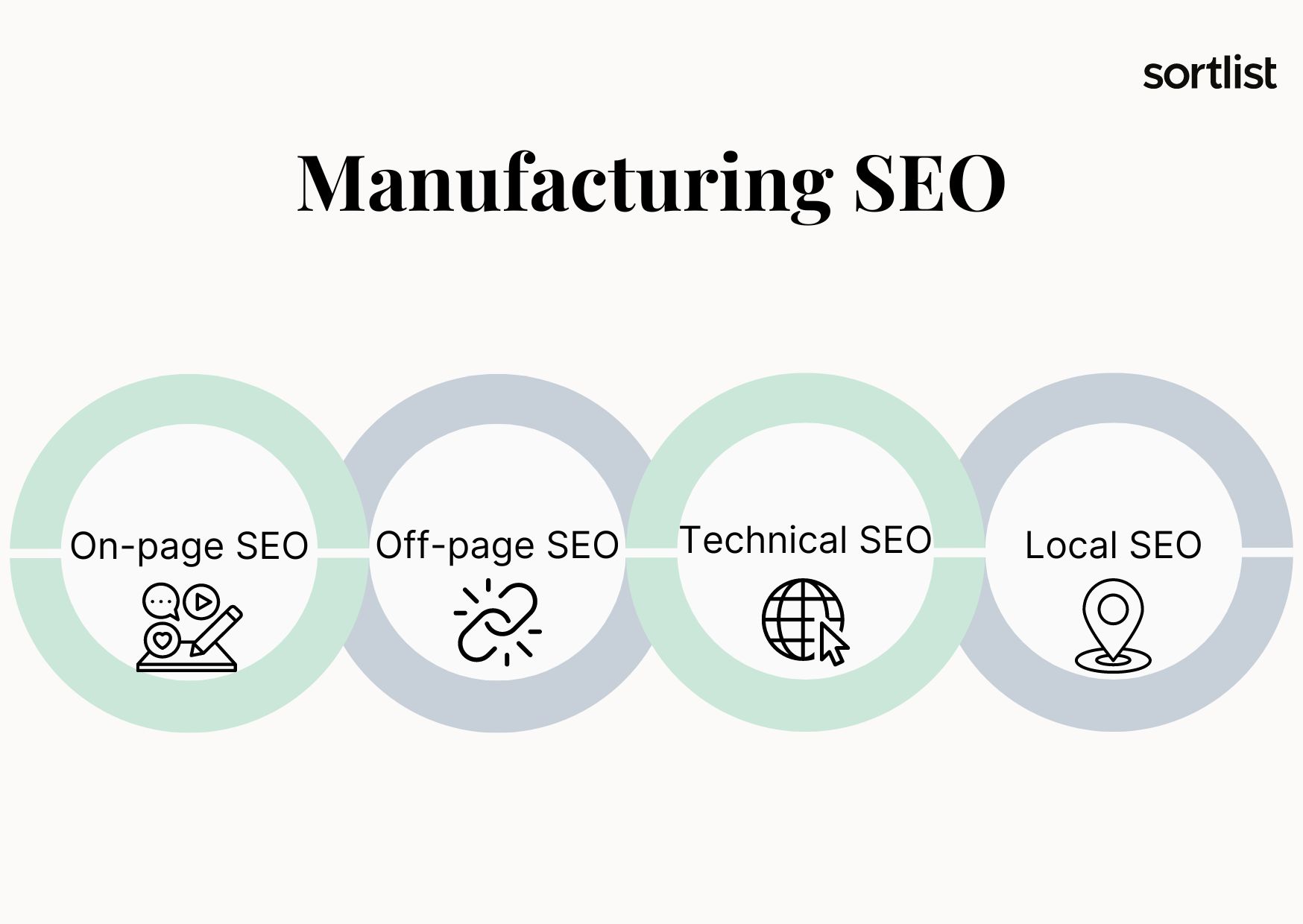
SEO consists of four main elements:
Each of these plays a key role in making your website easier to find and navigate. For example, on-page SEO is all about content creation and optimization, while technical SEO is dedicated to making your site findable, crawlable, indexable and rankable by search engines.
What Is Manufacturing SEO?
With this in mind, manufacturing SEO is the process of improving a manufacturing company’s visibility in search engines by helping it reach the top positions on the results pages for keywords relevant to its target audience.
This is done through a variety of measures, including a good understanding of who your customers are and how they search the web, keyword research, competitor analysis, content creation and optimization, submission of your business to industry directories, and more.
Does Your Manufacturing Company Need SEO?
The short answer is YES. Any business, regardless of industry or size, will benefit greatly from having a website that’s optimized for search engines. The reason for this statement is simple. Prospects and potential customers use the Internet to find solutions to their problems, to find information about them, and to read reviews that help them make decisions. If your business name doesn’t appear in the top results, it’s very difficult for it to be considered among buyers’ options.
In fact, it’s estimated that 89% of B2B decision makers turn to the Internet when searching for solutions to their business problems. Having an SEO strategy in place helps put your company name in front of their eyes, increasing the chances that they will visit your site and consider your brand over the competition.
In other words, having an optimized manufacturing website allows you to get more organic traffic and generate new leads. Two things that lead to more sales.
Manufacturing SEO Marketing Statistics
In order to help you better understand why you need a manufacturing SEO strategy and the impact it will have on your business, we have gathered some of the most recent statistics.
- 75% of Internet searchers never go beyond the first page of search results.
- On average, B2B researchers conduct approximately 12 searches before engaging with a specific brand’s website.
- 84% of industrial buyers say they use the Internet as a starting point for researching companies, components and services.
- 70% of industrial professionals say they compare suppliers online.
- 57% of B2B marketers believe SEO generates more leads than any other marketing initiative.
- Among B2B buyers, 94% research online before making a purchase.
- 57% of industrial buyers make purchasing decisions before ever interacting directly with a manufacturer.
- 40% of B2B buyers consume three to five pieces of content before contacting a salesperson.
- 63% of manufacturers use website content to educate audiences about their company or industry. 88% use it to increase brand awareness.
Are you ready to start designing and implementing an SEO manufacturing strategy for your business?
Manufacturing SEO Strategy: Design and Implementation
Now that you know that your potential customers search the Internet to learn about potential vendors and make a decision, it’s time to start designing and implementing an SEO strategy that will help you rank your site in the top positions in search engine results pages for various keywords.
This process may seem overwhelming, and that’s OK. You can choose to hire an SEO professional to work in-house with your marketing team. Or you can work with an SEO agency that has experience working with manufacturing companies. Either way, you need to look for certain characteristics:
- Experience
- Knowledge
- Access to specific tools
- Understanding of the manufacturing industry and target audience.
On-Page SEO for the Manufacturing Industry
On-page SEO is the first step in your SEO strategy. It refers to the efforts made within your website to get high quality and optimized content. Keep in mind that the following recommendations must be applied to newly created content as well as your existing content.

Find manufacturing keywords to optimize your content
When it comes to manufacturing SEO, it’s imperative that you pay close attention to the keywords you use. You want to work with queries that are not too broad. They tend to have high competition levels and it will be hard to see results in the short or medium term.
In the process of searching for keywords, you will be faced with 4 terms:
- Search volume: How many people search for this keyword on a monthly basis?
- Keyword difficulty: How difficult is it to rank for that keyword?
- Relevance: How relevant is this keyword to your specific manufacturing business?
- Search intent: Is this an informational or transactional search?
Remember that your goal is not to reach thousands or millions of people. It’s smarter to try to reach more targeted people who have a higher purchase intent. Work with long-tail keywords, which have a medium or low difficulty level and significant search volume. Keyword research tools like Google Keyword Planner, Google Trends, Soovle or Moz Keyword Explorer will help you gather this data.
We highly recommend that you start your keyword research process with queries that
- Match your manufacturing niche.
- Relate to your business location.
- Address your customers’ pain points.
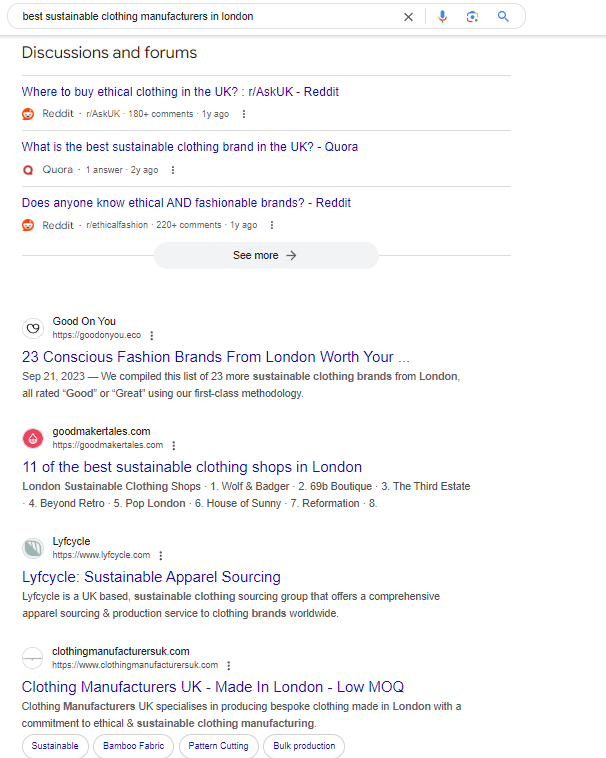
For example, you can use manufacturing keywords such as
- [product/service] company
- [product/service] company [location]
- [product/service] supplier [location]
- [product/service] distributor [location]
Work on your meta tags and descriptions
Now that you know which keywords to use, make sure you place them in strategic areas of your website page and content. Meta tags and meta descriptions are a must.
- Make sure you keep title tags between 50 and 60 characters and that they include the focus keyword for your post. This will help ensure that it is displayed properly in search results.
- Your meta descriptions should be between 150-160 characters. You want to provide a concise summary of what the content is about.
Your focus or long tail keyword must be present throughout the content.
Add header tags to better structure your content
You want to divide your content into different sections to make it easier to read. Adding header tags makes this possible and makes it easy for readers to quickly scan and stop at the specific section that interests them the most.
To add and optimize your header tags, simply follow these guidelines
- Use one H1 header tag per page. It’s the first thing visitors see, so make sure it’s attractive, compelling, and contains your focus keyword.
- Stick to the traditional hierarchy of headers (H1, H2, H3…) Don’t jump from an H2 to an H4, this will affect the user experience.
- Adapt your headers to the search intent of your visitors.
- Don’t use multiple keywords in a single header. Stick to one!
- Use related keywords whenever possible.
Work on your URL structures
A URL is made up of many different elements (protocol, subdomain, domain, subdirectory, and slug), for SEO purposes we will stick to the slug. This is the part you can customize to better describe your content.
Some best practices include:
- Work with a precise phrase or term that quickly describes your content.
- Include your focus keyword at the beginning of the slug.
- Use dashes to separate words.
- Make all words lowercase.
- Avoid unnecessary parameters such as “?”, “&”, and “=”.
Add internal links
As part of your on-page SEO efforts, you need to include internal links to your content pieces and internal pages. This helps you build the hierarchy of your content, linking from the pillar pages to the topic clusters and supporting pages. Each time you add a link, make sure the anchor text is relevant and aligned with the keywords and content of the page you are linking to.
Optimize your images
Finally, you need to spend time optimizing every image and multimedia piece you include on your site. To do this, you need to
- Make sure your images are useful to your readers. You can work with photos, graphics, charts, icons, logos, or even screenshots.
- Use the right image format. SVG is usually best for icons and logos, and WebP for all other images.
- Give images a descriptive and concise filename.
- Tag them with metadata or ALT text. Try to stick to less than 125 characters that clearly explain the context of the image.
- Compress your images.
- Use responsive image scaling to ensure that they fit on any screen size and resolution.
For more in-depth information on on-page SEO, please read our article: The Ultimate 2024 Checklist for On-Page SEO Services + Examples.
Off-Page SEO for Manufacturers
Your manufacturing SEO strategy must include off-page SEO measures. These are the actions that take place outside of your own website and help improve searchability, organic traffic, conversion and sales. These techniques focus on having well-known sites link back to your site and point people to you.

Let’s take a closer look at the ones that will help you a lot.
Fix broken links
It’s likely that there are sites that mention your brand or products but don’t link back to you or have broken links. Use tools like Ahrefs to identify them and manually contact them to ask them to add a link to your site. Be sure to provide them with the link you want them to add.
Write guest blogs
Reach out to relevant sites in the manufacturing industry and market that you want to get quality backlinks from and pitch them on content ideas that you or your team can write for them. Do it in a way that they can’t say no. Give them a series of title ideas you can write and explain why they make sense.
Identify unlinked brand mentions
Manually contact websites and news outlets that mention your brand to add a link to your site. Share the link you want them to use, which can be to your home page or to a specific topic page.
Share your expert advice
Contact websites, podcasts, YouTubers, and media outlets and share your expert advice on relevant industry/market topics. Having your name linked to theirs will benefit you greatly and drive more organic traffic to your manufacturing business website.
Take advantage of social media
Develop a strategy around the social media platform your audience uses most and create content for it. You want it to encourage readers to engage, comment and talk to you. It’s imperative that this strategy include specifics on tone and voice, ways to answer questions, and other details on proper usage and style.
Manage your online reputation
Monitor what your users are saying about your company, products, and services, both on social media and in the rest of the online world. Use monitoring tools and Google Alerts to do this, and carefully neutralize negative or neutral comments by addressing the misinformation or issues raised. For a comprehensive approach, consider exploring our SEO in France services.
Run an influencer outreach campaign
Working with relevant influencers can give your off-page SEO efforts an extra boost. Google highly values people and brands with a significant number of followers and relevance who mention your brand, products, or services. Do some research to find those influencers who are naturally associated with your manufacturing company, products, or services.
Leverage forums and community participation
Have your team actively participate and contribute valuable content to online forums. Ask them to constantly monitor mentions of topics relevant to your audience and engage with them by sharing data, opinions, insights, and any additional information relevant to readers.
Our “Off-Page SEO Checklist for 2024: Boosting Your Rankings” article will walk you through these actions in detail.
Local SEO for Manufacturers
Another key component of your manufacturing SEO efforts is local SEO. It is responsible for making your website, brand, products and services findable by people in your area. Its main goal is to increase in-store traffic and sales. All this at a low cost and high ROI.
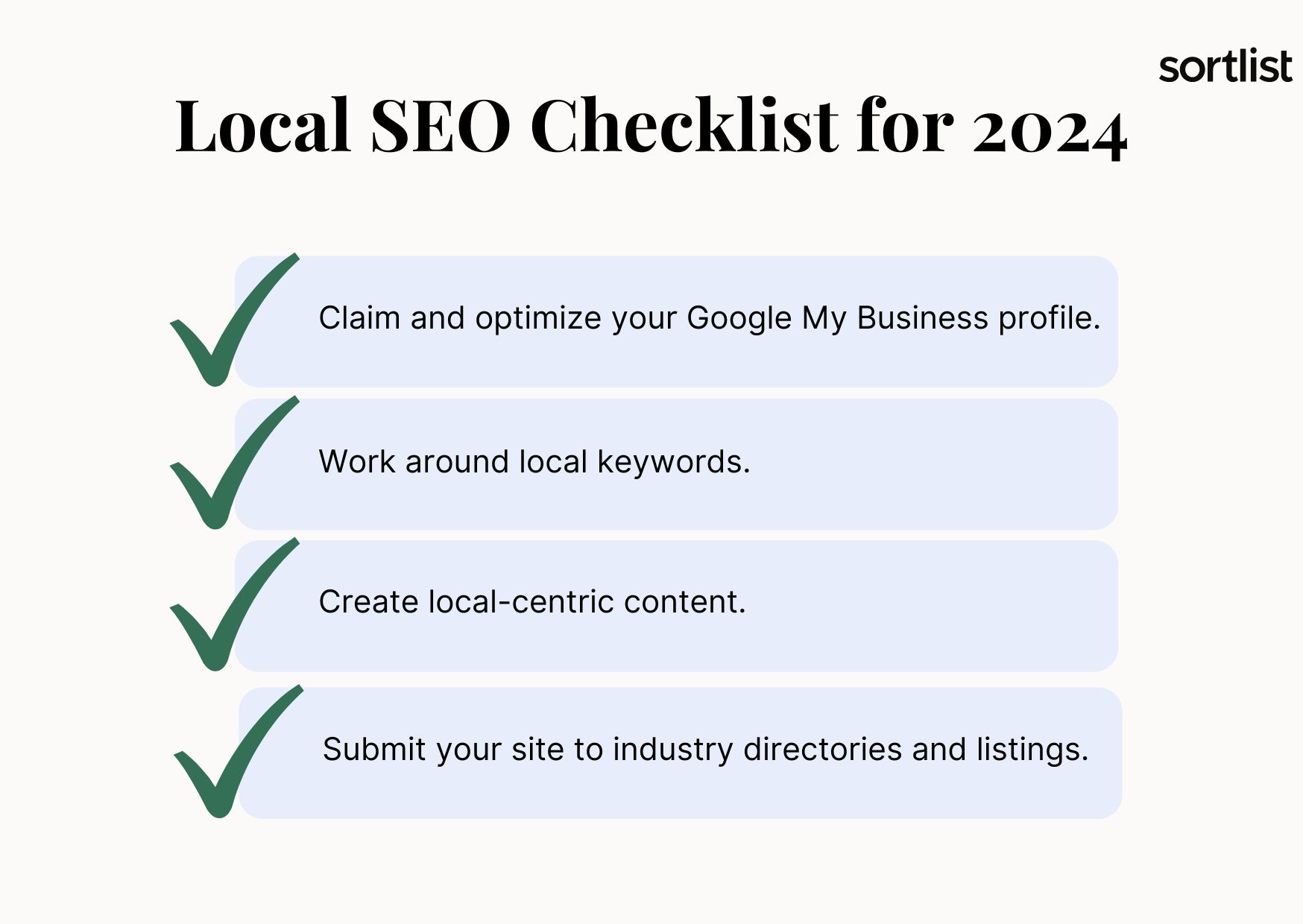
So what do you need to do to reap these benefits?
Claim and optimize your Google My Business profile
This action, while important, will only take 5 minutes of your time. Plus, it’s free, easy, and has great benefits, including
- Helps manufacturing companies get found on Google by users who are actively searching for manufacturers.
- Allows you to control what information is displayed about your manufacturing business: address, phone number, pictures, services, and more.
- Helps you build trust by displaying comments and reviews from your clients.
To get started, follow these steps
- Go to Google My Business.
- Enter your business name.
- Select your business type.
- Enter your location. You can add multiple locations if needed.
- Add your contact information.
- Verify your business. Google will send you a physical location code; if you have it, enter it to verify your business.
Once all of this is done, you will need to tweak your profile:
- Include your business hours.
- Add a full description of your business. Add relevant local keywords.
- List the products and services you offer.
- Include relevant images of your products and services.
- Allow reviews and comments.
- Respond to all reviews and comments within hours of receiving them.
- Look for more reviews.
- Make sure all the information you share is relevant, accurate, and answers the questions your potential clients have.
Work around local keywords
Every SEO strategy revolves around the keywords your target audience uses to find your products and services. Local SEO is no exception. The difference is that it ties keywords to local areas, making your website easier to find by local shoppers. Take the time to understand what searches people are using so you can increase your relevance and visibility. Remember to include these keywords in your content, website, landing pages, Google My Business profile, and more.
Create local-centric content
You want to create content (blog posts, videos, podcasts, etc.) that revolves around local keywords. For example, a blog post about “how to find the best lean manufacturing providers in London”. Making it local helps people feel connected, engaged, and excited.
Submit your site to industry directories and listings
Finally, it’s important to submit your business information to relevant directories and listings in your area and industry. Take the time to check which manufacturing directories and listings are available so you can submit your business name, address, phone, email, website, and product/service information.
To learn more about local SEO, please read our article on “What are the Benefits of Local SEO for Your Business?”
Technical Manufacturing SEO
Finally, you need to include a number of action items that revolve around technical SEO. They are designed to improve the usability and performance of your website. They make it friendlier and easier for users to navigate your site, and easier for search engines to crawl, index, and rank your site in their results pages.

To learn more about each of these points, we highly recommend you read our blog post “Ultimate Guide to Technical SEO Services (with a DOWNLOADABLE Checklist)”.
Design a logical and user-friendly site architecture
Site architecture refers to the way your site’s pages are linked together. To make it easy for Google’s bot to crawl, you need to create a structure with a logical hierarchy.
- Have the homepage link to the category pages.
- Have the category pages link to individual subpages.
Submit your Sitemap to Google
The Sitemap is a file that contains a list of the most important pages on your site. To find it, try one of these options
- yoursite.com/sitemap.xml
- yoursite.com/sitemap_index.xml
Once you have it, you need to submit it to Google. Please follow these steps:
- Go to Google Search Console.canonical
- Click Indexing, and then click Sitemaps.
- Enter your Sitemap URL and click Submit.
Managing duplicate content and using tags
Canonical tags are designed to help you tell Google what specific content (if it’s duplicated or similar to other content on your site) it should crawl and rank. To use them, you just need to add rel=”canonical” to the head section of the page you want.
Secure your site with HTTPS
Security is something that is highly valued by users and search engines. Make sure that your website has a valid SSL certificate to protect sensitive information shared by users and shoppers.
Measure and improve website speed
Another component that affects usability and user experience is how fast your page loads. It should be less than 3 seconds. Find out what this number is for your manufacturing site and take the necessary steps to improve it. Google’s PageSpeed Insights will help you do this.
Make sure your website is responsive and optimized for mobile devices
Today, more than half of Internet users are browsing from a mobile device. With this in mind, you need to ask your website team to ensure that your website is designed for mobile first. That way, you can be sure that everyone who navigates through your content will be able to enjoy it.
Use Breadcrumbs
Breadcrumbs are a trail of text links that tell visitors exactly where they are on your site and how they got there. It’s there to help them navigate through the different pages of your site by clearly pointing out how to access higher-level pages.
Other technical SEO measures include implementing schema markup, optimizing for Core Web Vitals, and fixing broken pages. As you can see, these are more technical things that require tools, knowledge, and experience.
Manufacturing Search Engine Optimization Best Practices
As you can see, creating SEO is not something that is easy or that you can do on your own. You need to work with someone who is trained in it or with an SEO agency. However, it’s important that you are aware of everything that needs to happen so that you can start seeing results.
With that in mind, we want to share some best practices that will have a huge impact on your efforts and organic traffic numbers.
Monitor your Competitors’ SEO Strategy
Pay close attention to what other companies in the manufacturing industry are doing in terms of SEO. This will help you understand:
- What efforts are worth replicating
- Their backlink profile
- What keywords you can incorporate into your strategy
- Content gaps you can fill.
Tools like Ahrefs, Moz Pro, SpyFu, and Similar Web are perfect for SEO competitive analysis.
Review and Edit Existing Website Content on Your Website
We’ve said it before, but we think it bears repeating. All of the on-page SEO measures we have explained need to be applied to your new and existing content. So take the time to audit your site and prioritize the pages you want to optimize. Your home page, about us page, products and services page need to work perfectly.
Create New Pages on Your Website
Because you are fully invested in creating a website that answers the questions of your users and potential buyers, you need to devote effort and resources to adding new pages:
- Contact us
- Team and leadership
- About us
- Pages for each product or service

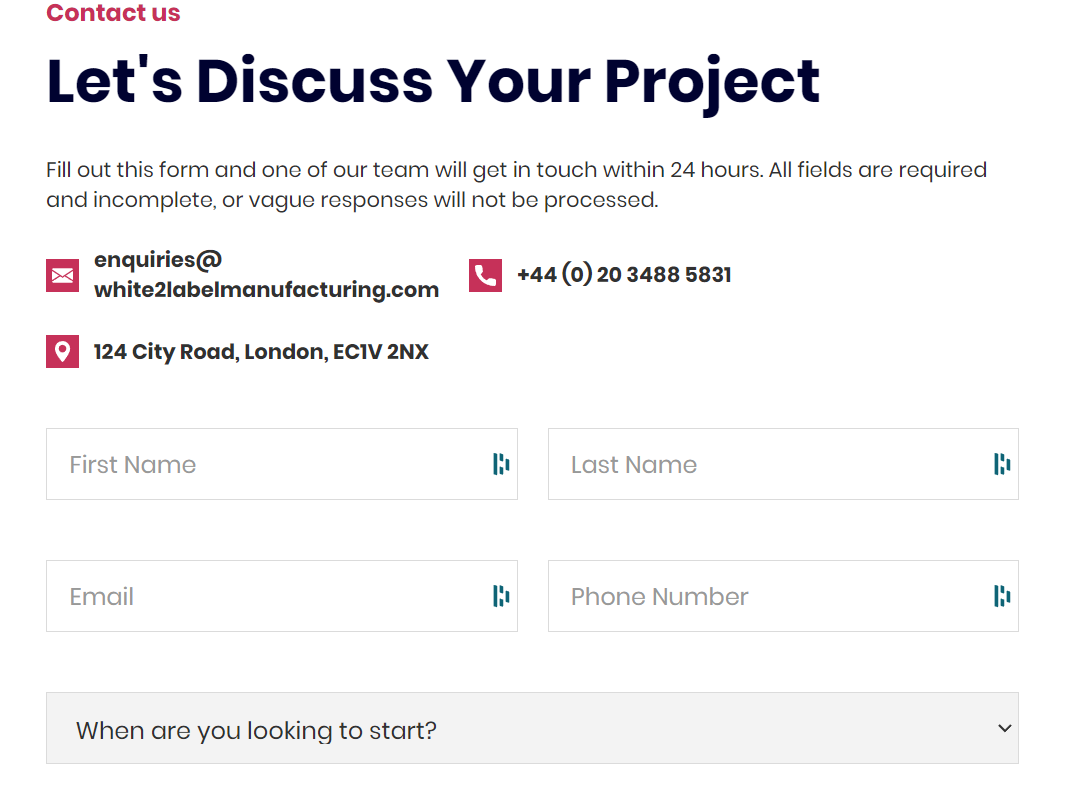
Make It Easy for Prospects to Contact You
After all, none of this will matter if your site visitors have no way to contact you. Make sure you have multiple ways for them to do so:
- Have a contact form
- Add a quote form
- Include your NAP (name, address, phone) and email in your universal footer.
- Include your NAP and email on your contact page
Key Takeaways
- Most manufacturers lack a strong SEO strategy, resulting in missed opportunities for organic traffic and sales. Search engines are a primary tool for B2B buyers to research solutions and suppliers.
- Benefits of SEO for Manufacturers: Increased organic traffic, brand awareness, leads and sales. Statistics show high internet usage for B2B research and decision making.
- A robust manufacturing SEO strategy is a must:
- On-Page SEO: Focuses on website content optimization. This includes keyword research (targeting long tail, relevant keywords), optimization of meta descriptions, title tags, header tags and URLs.
- Off-Page SEO: Builds site authority through external links. Strategies include fixing broken links, guest blogging, influencer outreach, social media marketing, and online reputation management.
- Local SEO: Optimizes website visibility for local searches. This includes claiming and optimizing the Google My Business profile, using local keywords in content and on the website, and submitting business information to relevant directories.
- Technical SEO: Improves website usability and search engine performance. Actions include creating a logical site architecture, submitting a sitemap to Google, managing duplicate content, securing the site with HTTPS, optimizing the site for mobile speed, and using breadcrumbs.
- Consider hiring an SEO agency with manufacturing experience. SEO results take time (approximately 6 months), but can significantly improve organic traffic, conversions, and sales.
Conclusion
Manufacturing SEO is perfect for any business out there looking to attract more organic traffic, increase conversions, and boost sales. If that’s your case, you need to start looking for an SEO agency with proven track records of working with companies in the manufacturing industry. They all have the knowledge, experience, tools, and team to design and implement an SEO strategy that delivers results.
Keep in mind that results will start to have an impact in 6 months. But it’s worth the wait. If you choose the right keywords and optimize for search intent, you will see your organic traffic numbers increase and this will improve conversion and sales.
Ready to get started?


