


The State of Web Accessibility in 2025: Are We Truly Inclusive?

A study of the top 1 million websites found that 95.9% had detectable WCAG failures on their home pages, which got us thinking about the state of web accessibility in 2025 and what you, as an organization, can do to make it better.
Let’s take a deep dive and identify action items you can take to make your website compliant and accessible to everyone, regardless of disability.
What is Web Accessibility?
Web accessibility refers to the process of ensuring that your website and online experience meet the needs of all users, including those with all types of disabilities (auditory, cognitive, neurological, physical, etc.).
By prioritizing accessibility, you are helping to create a more inclusive and equitable digital world. Even better, it will improve the user experience for those with:
- Temporary disabilities.
- Situational limitations.
- Poor Internet connections.
Web Accessibility in 2025 – Are We Inclusive?
A study published by Accessibility Checker shows that despite efforts, websites are not inclusive or accessible. There’s room for improvement, and we all need to do our part.
‼️88% of websites are still not fully compliant with the latest web accessibility standards. Why is this happening?
- Lack of awareness of standards and guidelines.
- Complexity of web accessibility standards.
- Cost of achieving full compliance.
😒The average Web site has an accessibility score of only about 60/100. The vast majority of compliant sites, with accessibility scores of 90/100 or more, are European-based, likely in response to the EAA’s digital accessibility deadline.
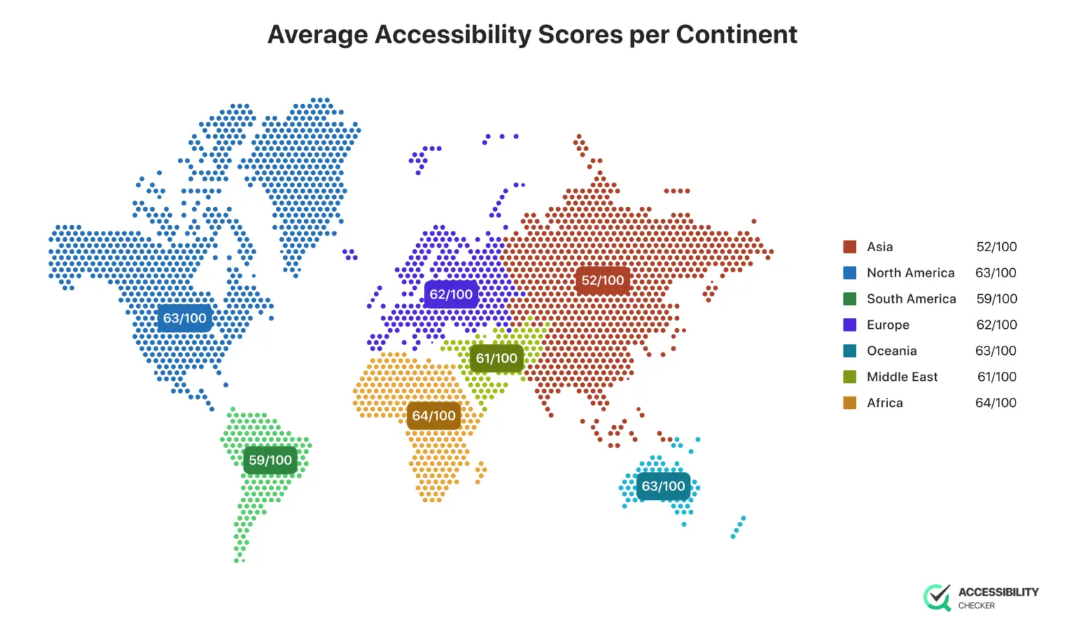
💰Sites with an accessibility score of 75/100 or higher are shown to have higher levels of revenue. Yet companies still believe that the cost of an accessibility lawsuit often far outweighs the time, money and effort it takes to achieve a compliant status.
Web Accessibility Laws, Regulations and Standards
With more than 16% of the world’s population (approximately 1.3 billion people) having significant disabilities, governments and organizations around the world have had to create various laws and guidelines to ensure that websites follow accessibility best practices.
‼️As a website owner or designer, you need to understand what these are and how to comply with them.
Keep in mind that your country may have specific laws and guidelines. We share only those that are promoted by the United States and the European Union and followed by most countries.
European Accessibility Act (EAA)
An EU directive that aims to improve accessibility (implementing features such as screen reader compatibility, keyboard navigation, and alternative text for images) for people with disabilities by requiring companies to make their websites, mobile applications, and e-commerce platforms more accessible.
Who Needs to Comply and When?
By June 28, 2025, all businesses operating in the EU (except small businesses with fewer than 10 employees and €2 million in revenue) must comply with the EAA accessibility requirements for their digital services. Failure to comply can result in fines and legal consequences.
Web Content Accessibility Guidelines (WCAG) 2.1 Level AA
Internationally recognized standards developed by the World Wide Web Consortium (W3C) to make digital content accessible to people with disabilities:
- Text alternatives for images
- Keyboard navigability
- Clear color contrast
- Resizable text
- Accessible forms and interactivity.
Level AA is the most commonly required level of compliance under legislation such as the ADA (US) and EAA (EU).
Why Is Compliance Important?
Compliance improves user experience, expands audience reach, and helps organizations avoid legal risk under accessibility laws.
Americans with Disabilities Act (ADA)
While the ADA does not specifically address websites or the digital world, it does aim to prevent discrimination against people with disabilities.
The U.S. Department of Justice has clearly stated that any business open to the public must ensure that its web content and mobile applications are accessible to achieve ADA compliance.
Building an Accessible Website – Action Items
By making accessibility a priority, you can avoid a lawsuit that can cause financial and reputational damage. Most importantly, it’s one of the best ways you can help make the world a better place.
To help you get started you should conduct and accessibility audit and identify key areas of improvements.
To ensure compliance with accessibility laws you should implement the following action items:
1. Ensure Content is Accessible to All Users
✅Provide alt text for all images and non-text content.
✅ Ensure video and audio content has captions and transcripts.
✅ Use strong color contrast.
✅Allow text to be resized (up to 200%) without breaking the layout.
2. Users Must Be Able to Navigate Easily
✅Ensure keyboard accessibility.
✅Provide skip navigation links for screen readers.
✅ Avoid flashing content to prevent seizures.
✅Allow users to pause, stop, or hide moving elements.
3. Make Information Easy to Read and Follow
✅Use clear and simple language.
✅Ensure consistent navigation across all pages.
✅ Provide descriptive labels for form fields and buttons.
✅ Provide error detection and suggestions in forms.
4. Ensure Compatibility with Assistive Technologies
✅Use semantic HTML for proper interpretation by screen readers.
✅Ensure that dynamic content updates are announced to screen readers.
✅Test with assistive technologies.
✅Follow ARIA (Accessible Rich Internet Applications) roles where appropriate.
5. Testing & Maintenance
✅Perform regular accessibility audits using tools such as WAVE, axe or Lighthouse.
✅Perform manual testing with screen readers (NVDA, JAWS, VoiceOver).
✅ Keep accessibility in mind when adding new content or features.
✅Train site managers and developers in accessibility best practices.
Conclusion
While there has been progress in terms of accessibility, there’s still a long way to go. Start your accessibility compliance project today – contact the best web design agency!


