

The Psychology of Web Design in 2025: How to Influence User Behavior

 5.00/5
Did you know that your website has an average window of 3-5 seconds to capture the attention of a new user? We live in a fast paced world and we need to act accordingly. Creating a website goes far beyond adding your branding, color palette and valuable content. You need to apply the psychology of web design so that you are able to capture their attention and get them to take action.
🤓Read on to learn the key psychological principles your web design team should understand and how to apply them effectively.
Our goal is to help you create websites that are equipped to influence user behavior.
What Is Psychology of Web Design?
The psychology of web design refers to the process of applying key psychological principles to create a more engaging and persuasive website. One that is aligned with the expectations, preferences, and behaviors of your end users.
This approach to web design ensures that your site is easy to navigate and provides a compelling user experience.
The result of psychology in web design?
- 👥Better user experiences.
- 👆Greater user engagement.
- 📈Higher conversion rates.
- 💓Stronger customer loyalty.
User Behavior and User Research Dictates Your Web Design
Before you start researching and applying various psychological principles to your web design, you must first focus on one key thing: researching user behavior.
What works for one company may not work for another. Take the time to clearly understand who your end users are and how they behave when they are online and using a website. This information is the stepping stone to creating a usable site.
You need to look closely at the data, conduct research and analysis to understand it clearly:
- 🤔What do your users want from your website?
- 🤗What motivates them to engage with your site?
- 🤬What are the common barriers they face when doing research online?
- 😤What frustrates them as they navigate a site?
The insights you find here will help you understand key things like:
- Where they expect to find the navigation bar.
- What types of calls to action they prefer.
- What colors they find more appealing.
- How long your website copy should be.
- Whether or not to include gamification.
- Which pages they are most interested in.
- How much you should prioritize load time.
- Etc.
Psychology Principles that Will Influence User Behavior and How To Apply Them
Once you have completed your user research and have a clear understanding of what they want or need, you can begin to apply the most relevant psychological principles.
Let’s take a closer look at them.
Hick’s Law
Explains that the more stimuli a person is exposed to, the longer it takes to make a decision. As a web designer, you will find the application of this psychological principle challenging, but you must accept and embrace it.
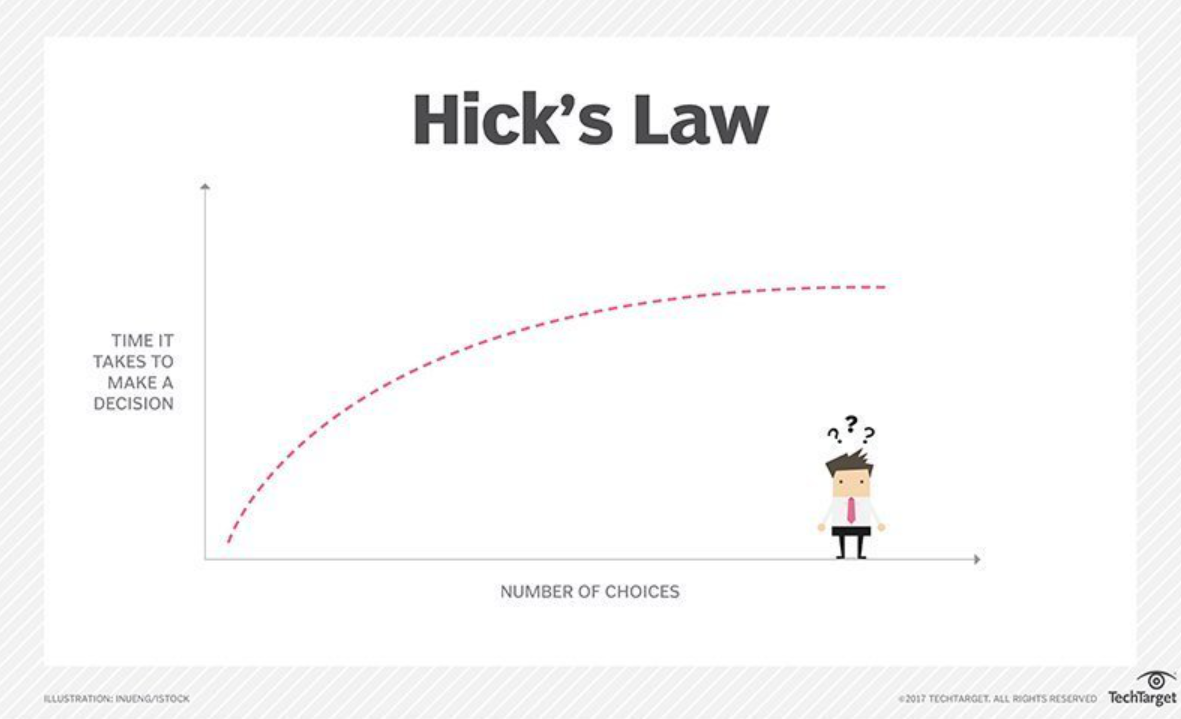
You want to avoid oversaturating your site visitors with too many options. This means that you must first understand what your target audience wants (user’s expectations) from your business and present them only with what’s more relevant to them.
Limiting the options will improve the user experience and keep them engaged.
Fitt’s Law
Explains that the time to acquire a target will depend on the distance and size of the target. For web designers, this means two things:
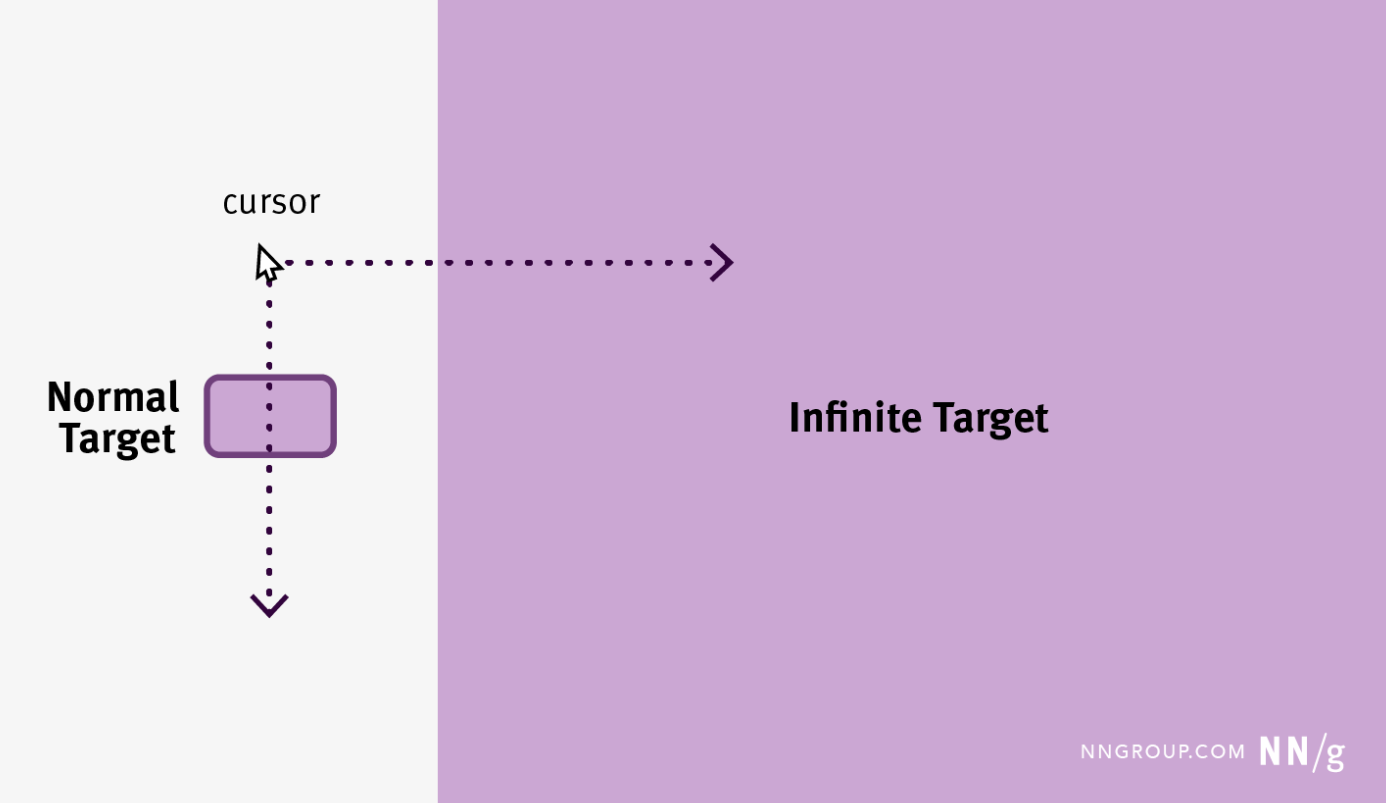
- Make your targets larger, as this increases the chances that users will click, tap, or hover over them.
- Place your key elements with careful consideration. For example, for mobile versions, place a “play” button near where the thumb rests.
Gestalt Principles
A set of visual principles that describe how people group visual elements to make sense of the world:
- 👣Proximity: How close objects are to each other.
- 🎨Similarity: How similar objects are to each other in terms of color, shape, and size.
- 🔗Continuity: How elements are connected or linked.
- ☑️Closure: How people fill in gaps to perceive a complete object.
- 👁️Figure-ground: How people perceive objects as either a focus or a background.
- ⚖️Symmetry: How elements are balanced or symmetrical.
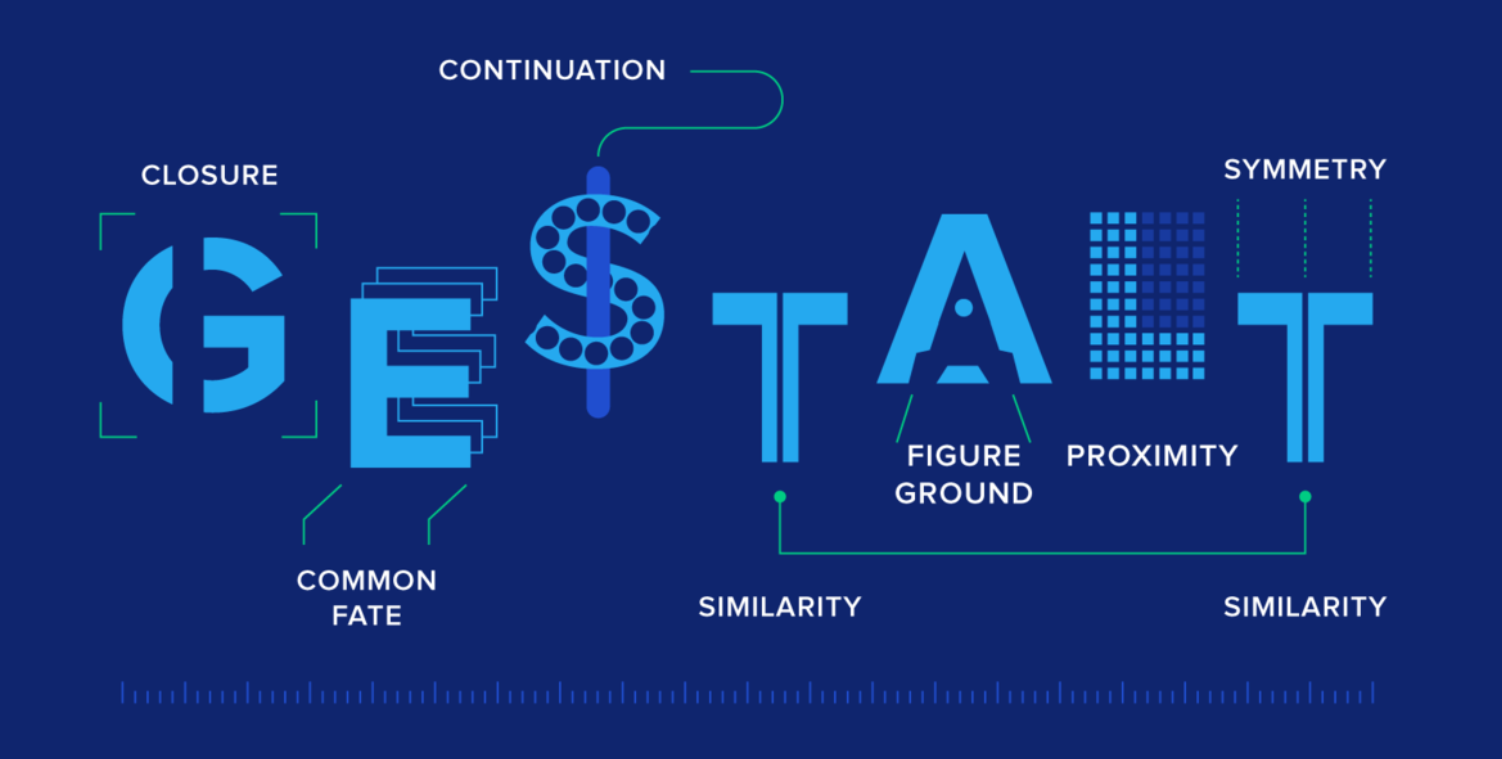
In web design, these principles are key to organizing your content and making your site easy to navigate and understand.
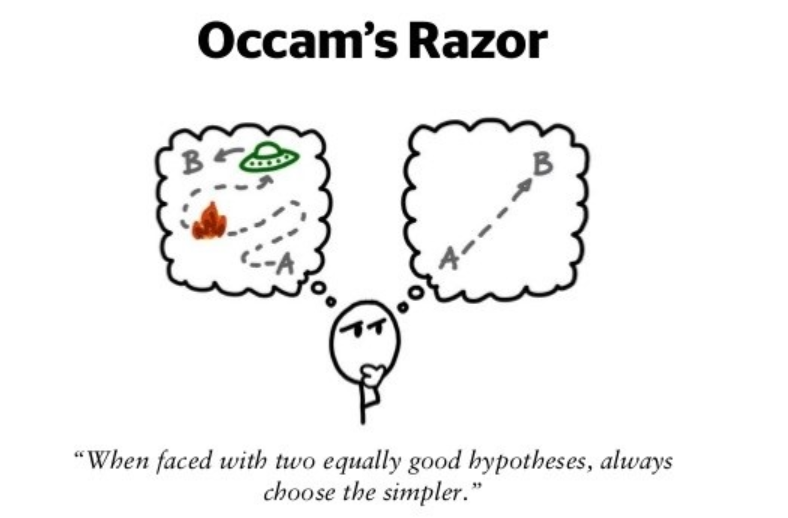
Occam’s Razor
A problem-solving principle that says the simplest explanation is usually the best, encouraging web designers to remove unnecessary complexity and focus on the essential elements.
Color Psychology
Explains that colors have symbolic meanings, aesthetic qualities, and the ability to evoke certain feelings and emotions.
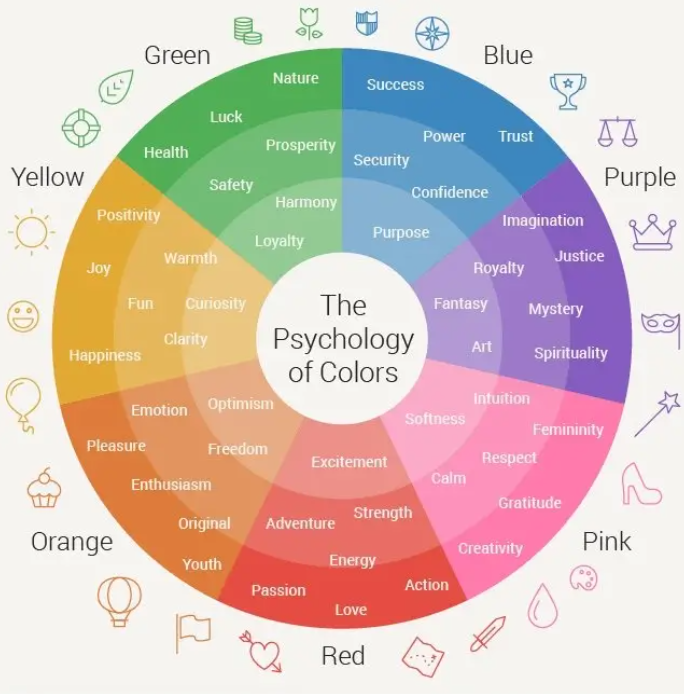
As a web designer, you can use them strategically to evoke certain subconscious feelings in your website visitors.
- 🔵Blue: Trust, peace, loyalty.
- 🟡Yellow: Creativity, Happiness, Warmth.
- 🔴Red: Excitement, strength, love.
- 🟢Green: Nature, healing, freshness.
- ⚫Black: Formality, drama, sophistication.
- 🟠Orange: Confidence, success, courage.
Visual Hierarchy
Describes how some elements in a visual field are more prominent than others. As a web designer, you need to internalize this because it will help you:
- Draw attention to specific elements.
- Connect elements.
- Create balance and focus attention.
- Add richness and dimensionality.
- Hold the viewer’s attention.
5 Visual Elements that Influence User Behavior
The key to success in web design lies behind the correct combination of web design elements with psychology principles. Mastering this art will lead your site to an increase in traffic, time spent on page, conversion, loyalty and sales.
Here are the 5 main elements you need to pay attention to:
- 🎨Color: The color palette you choose should not only help your brand stand out, it should help evoke specific emotions to influence purchase decisions.
- 📐Spacing: White space (also known as negative space) should help draw attention to the most important information or elements of your site.
- 🗺️Layout: The way you arrange the elements of your page should help keep the visitor interested, motivated, and in control.
- 🔠Typography: The way you arrange text should help express your brand’s identity and personality.
- ♦️Shapes: Beyond the logo, shapes should help you set the mood for your site and guide the user flow.
Conclusion
As you can see, combining design elements and psychological principles will help you achieve great results. To start your new web design project or redesign your site, contact one of the best web design agencies today.


