

Mobility aids case study: how to make slick ads work for any industry

Last update: 31 March 2025 at 04:35 pm
Today’s Great Business Stories newsletter is about CareCo. A company that dominated the core demographic for mobility aids: over 65s.
Wait, wasn’t this all about younger buyers?
Absolutely, because to grow, together with integrated agency HUB they made the surprising decision to target a much younger, millennial and Gen X demographic.
The playbook they used to advertise mobility aids to a younger generation is a masterclass in social media advertising, product positioning, and creative video design.
It sounds crazy, but by making it a success CareCo:
- Increased sales of the featured products by 53%
- Increased social media engagement by 36%
- Increased dwell time for customers in-store.
And if this formula can sell mobility aids, it can sell anything.
Let’s dive in 👇
An unexpected new demographic to grow market share
Selling premium mobility aids to the young may seem unusual.
But adult children are key influencers in their parents’ purchase decisions; effectively advertising to them would improve sales among over 65s.
And the younger generation is an untapped market: 11% of under 35s have a disability that either limits them a little, or a lot. And in 2025, elder millennials will be 44 years old.
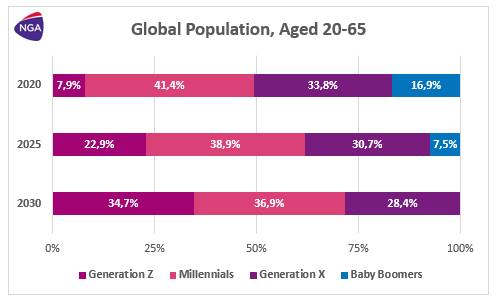
With average onset of mobility disabilities at 52, shifting demographics meant targeting a social first generation was a requirement for future success.
But… how to advertise scooters, walking frames, and other mobility aids to a younger, social-first, generation?
Here’s how it worked.
The surprising role of mobility aids for a new generation
For an older audience, mobility aids often mean just that – mobility.
But using social listening, data mining, and good old-fashioned research – it became clear that the experience of a younger user is different and more complex.
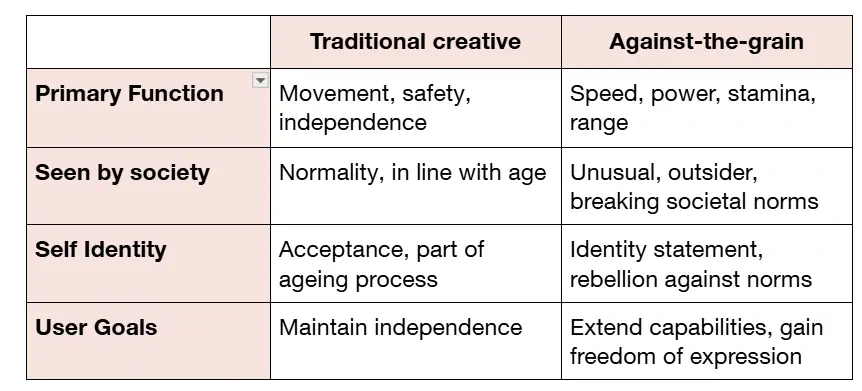
A mobility aid gives them superpowers, getting them from A to B quicker – or increasing their range and stamina.
But their aids can be a source of tension, frustration, discrimination, and even of fear, in a society unaccustomed to seeing younger people with disabilities.

And CareCo couldn’t help but notice the stigma that surrounds their products – particularly in the 30-60 age group: something they wanted to position themselves against.
So a successful, against-the-grain campaign needed to emphasise different characteristics:
Platform and content preferences
86% of millennials use social media on a daily basis: so targeting them on social was key.
That meant adding a new string to their bow, filling a gap in the existing creative strategy – like the TV ads they used to target the over 65s 👇
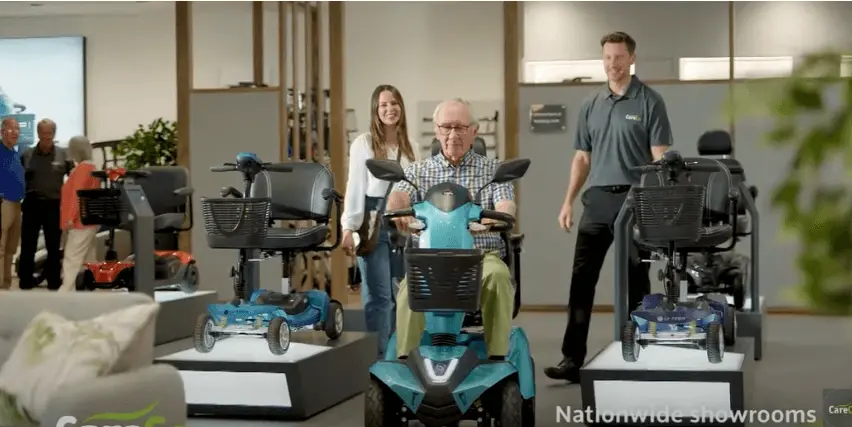
To resonate and differentiate meant more than putting money behind their TV advert.
Whether buying for themselves, or a loved one – millennial content preferences are radically different.
The average TikTok is 20 seconds long. To grab the attention of a younger audience, they had to change format 👇
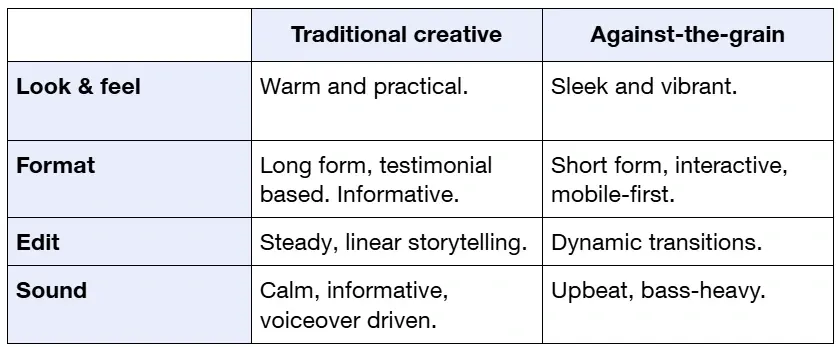
So CareCo needed a scroll-stopping advert that grabbed attention fast. And it had to be sleek, vibrant and empowering.
For this, the agency HUB drew their inspiration from the masters of slick, inspirational ad: the tech and sport sectors.
Applying the Nike ad formula to any product
Products like Apple’s new iPhone, or Nike’s mercurial football boot are clearly seen as aspirational, premium, and young.
And that’s supported by their advertising: fast-paced, dynamic and product focussed (more on that later).
That’s exactly the kind of creative angle that went against the grain, and would compliment CareCo’s existing strategy.
But above all, they’re positioned as tools that give you superpowers 🦸
Apple turbocharges creatives – turning your casual snap into a work of art 👇

And to use Nike boots, is to become a superhero yourself. Like the stars wearing them on a global stage 👇

That model was super relevant to a young audience, for whom their mobility aid gave them physical prowess.
But how to adapt it for this product?
Making slick ads work for any industry
An employee in the background to assemble and disassemble wasn’t going to give the premium feel they needed.
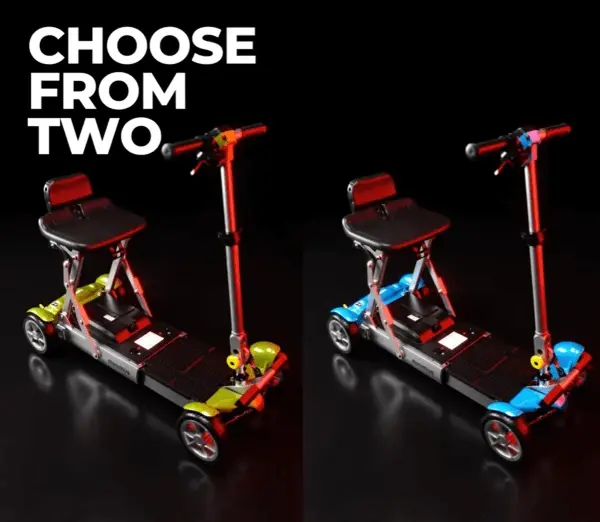
So HUB turned to CGI to create digital models, just like those tech ads.
First was a 3D scanning of each product, in a variety of positions – to make an accurate computer model.

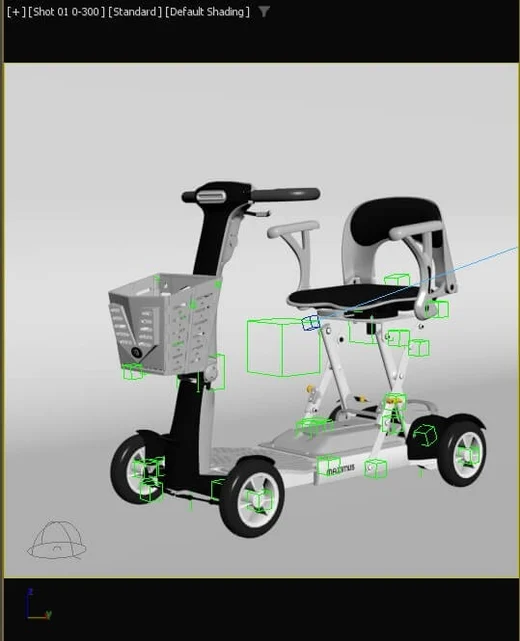
To show off the quality and build, artists recreated materials and textures digitally:

And to educate on the product, the CGI team added realistic movement, while the creative team began to work on the concept.
Outdoor shots were discarded (too traditional), in favour of a simple virtual environment, lit by simulated gel-lighting for a kind of nightclub feel.
The final result 🎥

For the full experience, you can check out the full playlist of videos here.
But how exactly did HUB use the common language and format of tech and sport ads to resonate with the same audience, in the same way?
Why they worked: ad psychology breakdown 🧠
What do Nike, Apple and CareCo have in common with their ads?
🚀 Redefining status quo to stand out
For Nike, it’s about rising above laziness (“Just do it”). For Apple, it’s celebrating creative individuality over conformity.
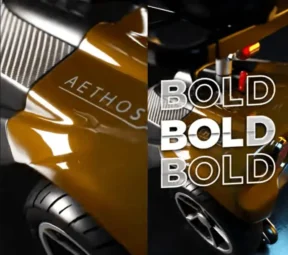
For CareCo, it’s about reimagining what mobility aids can be. The pounding music, sharp edits, and taglines like “be bold” send a clear message: this isn’t just about mobility—it’s about power, freedom, and style.
For an audience tired of stigma and ready to embrace their independence, it’s a message of empowerment.
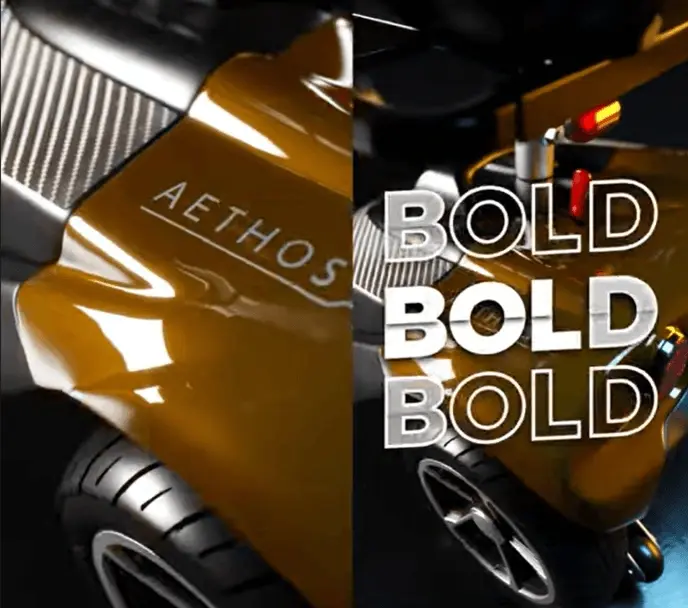
◡̈ Minimalist design to focus on the product
The product is the focus – as is the quality build and design. That shows confidence in its quality and positions it as premium.
And showing off the futuristic materials and design appeals to a forward-thinking mentality.
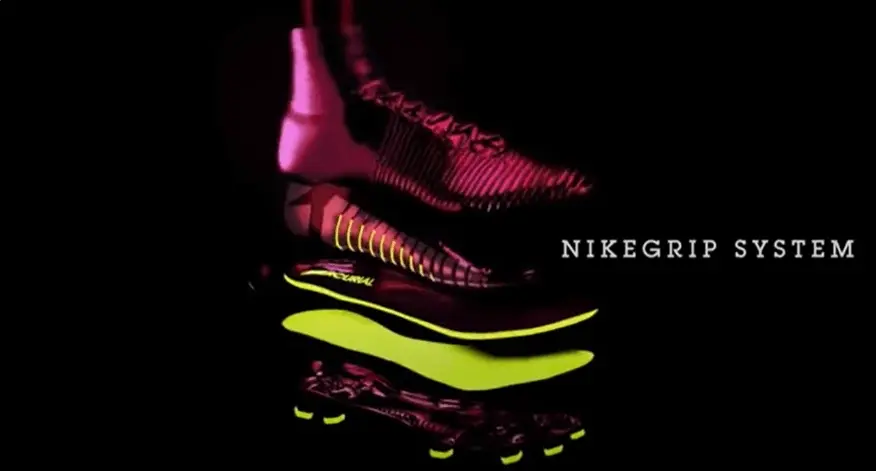

🌀 Creating energy with quick edits
Attention-grabbing edits mimic the pace of social media content. That’s the energy of a fast-paced lifestyle – positioning the product as something you need to “keep up with the action.”
You can see that throughout the iPhone 16 ad, or CareCo’s Maximus advert.
🍭 Using colour psychology
Blacks represent sophistication: while vibrant accent colours emphasise energy and confidence. Especially in football ads those standout colours reflect a desire to “be seen” on the field. The colour focus is present for CareCo too – for a younger audience that values self-expression.
⚡ Making the product dynamic
Motion graphics are used to highlight product features (e.g. components assembling dynamically) but also benefits. Motion trails, flames, or particles emphasise speed and control: appealing to viewers used to digital effects in gaming and media.

And the results?
It was a bold solution but CareCo, is an ambitious, innovative company who understood the need to expand their creative strategy, to expand their target market. And they trusted HUB’s vision to differentiate them from the competition.
Advertised principally on social, and in-store:
- Sales improved by 53% for the products featured in the CGI videos.
- Social media engagement increased by 36%.
- Dwell time in-store skyrocketed.
- CareCo’s sales team got a great ice-breaker, helping them to sell.
Amazing for what might have seemed an impossible task.


