

Influencer Marketing vs Paid Ads: Which Delivers Better Results?

Influencer marketing vs. paid ads – Which has a higher ROI? A question almost every marketer faces when creating a marketing plan.
Looking at recent statistics, 63% of marketers say that influencer-generated content outperforms other brand-driven content.
But that doesn’t mean you should ignore paid ads altogether. These efforts have an average return on investment of 200%.
So what should you do? What will help you get better results for your brand?
Understanding Influencer Marketing
Influencer marketing is the practice of working with popular and influential social media content creators to promote a brand, product or service.
🧑⚖️These partnerships have been around since the early days of social media and have gained so much attention (over 80% of companies are dedicating budget towards influencer marketing) that laws, regulations and guidelines are now being developed and implemented around the globe.
- United States (the Federal Trade Commission – FTC requires influencers to disclose brand relationships and provide honest opinions about products or services)
- United Kingdom (the Advertising Standards Authority -ASA mandates that influencers must clearly disclose any paid partnerships or sponsored content through visible tags such as “#ad” or “gifted”)
🏆The main reason behind the success of influencer marketing is simple: people trust people. 63% of consumers are more likely to buy from an influencer they trust.
Types of Influencers
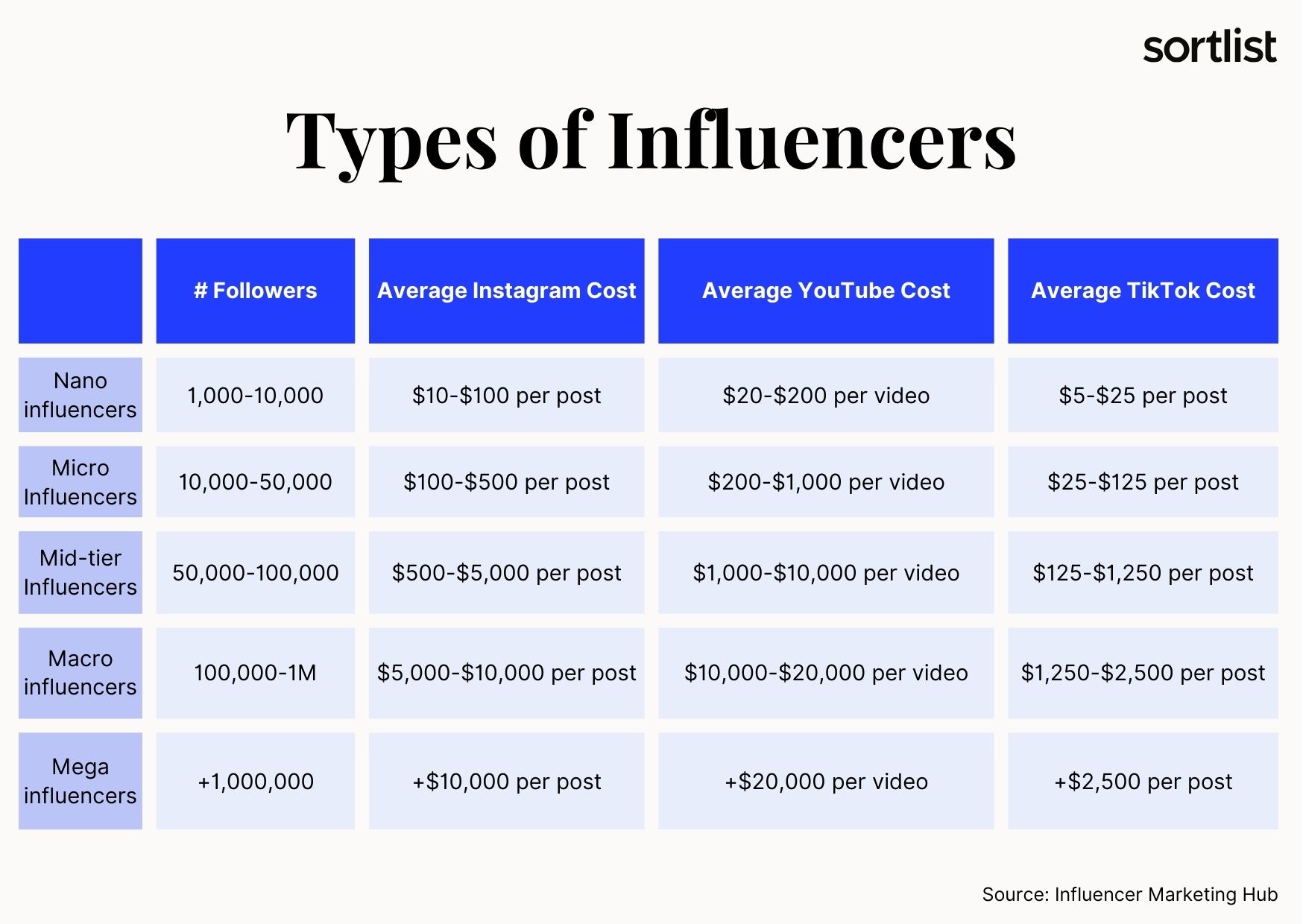
There are several types of influencers you can work with. The difference between them is the number of followers they have.
- Nano influencers: usually very niche focused.
- Micro influencers: have a dedicated and engaged audience.
- Mid-level influencers: have significant reach and a strong connection with their audience.
- Macro influencers: reaches a wide range of industries and audiences.
- Mega influencers: often celebrities, athletes, or people with high-profile personalities.
But don’t make the same mistake as others. Just because someone has over 600,000 followers does not mean they will work for your brand. On the contrary, working with micro and nano influencers tends to be more effective. They may have smaller followings, but they tend to be more trusted, have the highest engagement metrics, and are more affordable.
Benefits of Influencer Marketing
Influencer marketing comes with great benefits, including
- ✅Increases brand awareness.
- ✅Builds brand authority.
- ✅Enriches your content strategy.
- ✅Improves SEO.
- ✅Improves customer engagement.
- ✅Increases reach.
- ✅Improves customer retention.
- ✅Improves competitive positioning.
More than one-third (31%) of U.S. adults believe their purchase decisions are influenced “somewhat often” or “very often” by social media influencers. More than half (52%) of 18-29 year olds say their purchases are influenced by influencers.
In short, an influencer’s post recommending your brand, products or services will have a significant impact on your audience growth, awareness, conversion rates, and sales numbers, if you’ve chosen the right influencer.
Exploring Paid Advertising
Paid advertising is a marketing strategy in which your business pays to display Internet-based ads to a targeted audience on search,social, or display networks.
These ads typically operate on an auction system. You set your budget and bid for the ad space. There are several ways to place your bid:
- 👆Pay-per-click (PPC): You pay for each click on your ad. This is the most common option for paid search ads (such as Google ads).
- 🔎Cost-per-thousand (CPM): You pay for every 1,000 times your ad is shown, whether or not it is clicked. This is typically used for display advertising and social media ads.
- 🎬Cost-per-action (CPA): You only pay each time someone completes a specific action: buy, download, subscribe, register, etc.
- 📽️Cost-per-view (CPV): You pay each time a user watches your video ad for a specific duration (for example, 30 seconds). This is the pricing model used for YouTube and TikTok ads.
Types of Paid Advertising
There are many different types of paid ads. The most common are
- Display ads: These appear as people browse the web. These ads appear in front of users who have shown an indication that they may be interested in your product or service.
- Social media ads: These appear on social media platforms such as Facebook, Instagram and TikTok for users with specific demographics and interests.
- Video ads: These ads are used to showcase products, create emotional connections, and tell brand stories.
- Remarketing ads: They are designed to re-engage users who have previously visited a website, remind them of a product, and encourage them to return and convert.
- Native ads: They are created to match the structure and function of the platform on which they appear. Often referred to as “sponsored” or “promoted” to distinguish it from organic content.
- Search Engine Advertising: These appear when people use search engines such as Google or Bing for specific keywords.
Benefits of Paid Advertising
85% of consumers say they research a product online before buying it. 47% of all global purchases are made online. The benefits of having your brand in front of potential customers as they browse the web are significant:
- ✅Paid ads allow you to reach thousands of people in minutes.
- ✅They offer advanced targeting options so you reach only those who are more likely to buy from you.
- ✅They come with measurement tools so you can make the necessary changes to get the results you need.
- ✅Paid ads can drive more traffic to your website.
- ✅They allow you to re-engage prospects.
- ✅They help you establish authority in the industry.
- ✅Paid ads help with visibility and brand awareness.
Comparative Effectiveness: Influencer Marketing vs Paid Ads
When deciding between influencer marketing and paid advertising, you’re essentially weighing two powerful strategies that can have a significant impact on your business.
- Influencer marketing can often deliver impressive returns due to its ability to create authentic connections between the influencer and their audience.
- Brands get $4.12 for every $1 spent on influencer campaigns on Instagram.
- Paid advertising offers predictability and control over your budget, with costs that can be scaled up or down as needed.
- Businesses earn an average of $2 for every $1 spent on Google Ads, for a 100% ROI.
Which one should you work with? The one with the highest ROI or the one with the most budget control?
Choosing the Right Strategy for Your Business
When deciding where to invest your marketing budget (influencer marketing vs. paid advertising), you should first consider your target audience and your marketing budget.
- Audience: Who are they? How do they spend their time online? Who do they trust/follow/engage with?
- Budget: How much money do you have to spend on marketing? Which influencers are you considering for your campaign? How much are they charging per post? How many posts would you need from them?
At Sortlist, we strongly recommend a balanced approach. Combining the credibility of influencers with the reach of paid advertising seems to be the most effective way to reach your target audience and make the most of every penny invested.
Conclusion
The question should not be whether to choose influencer marketing over paid advertising, but how to combine both efforts as part of your overall marketing strategy. Get in touch with a digital marketing agency today and start working towards a marketing approach that allows you to reach your target audience through multiple channels.


