


Enhancing Lives: The Future of AI Accessibility in Everyday Technology

According to a recent study, 2 out of 3 websites need to implement accessibility measures to remove existing barriers. Beyond being non-compliant, this number clearly shows that businesses around the world have a long way to go. The good news is that AI accessibility opens the doors to a world of opportunity.
One where people with visual impairments can quickly convert all text input to audio and enjoy and engage with your content. Where people with hearing impairments can enjoy the wonders of your videos by converting their input into visual formats.
💡Can you imagine a digital world that we can all enjoy? You can make a difference!
What is AI Accessibility?
AI accessibility refers to the use of artificial intelligence to improve accessibility in a variety of areas (including web design, communications, job application processes, and more) for people with disabilities.
The goal is to empower people with disabilities to live more independent and fulfilling lives through the use of AI tools to ensure equal opportunities for all.
AI Applications in Assistive Technology
Assistive technology has been around for decades. Eyeglasses started in 1268. Wheelchairs were first used in the 5th century. Braille was invented in 1824. Since then, it has evolved to the point where we have hearing aids, walkers, screen readers, hardware, software, and more to help people with disabilities live their lives to the fullest.
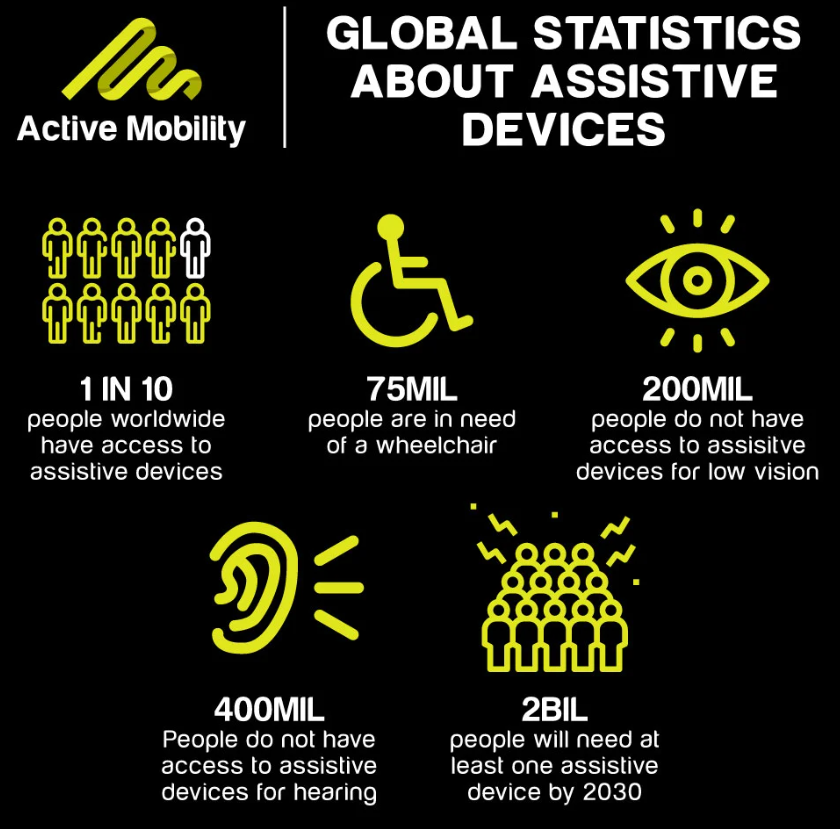
Fortunately, the use of AI has reached new frontiers. It has gone from automating repetitive business processes to transforming accessibility.
Today, it has proven that the use of algorithms and data-driven insights can enhance the power of assistive tools. Here’s a list of the most common.
- 🗣️AI-powered speech recognition: Automatically generates captions for video and transcriptions for audio content enabling those with hearing impairments to access multimedia content without the need for a screen reader.
- 🗣️Language translation tools: Facilitates communication between people who speak different languages and translates spoken words into sign language.
- 🖼️AI-based image recognition algorithms: Describes objects, scenes, and text within images to assist people with visual impairments, enabling them to navigate more independently.
- 🗣️AI-powered voice recognition: Enables users to control devices and navigate the web with voice commands, improving their online accessibility and overall experience.
- 👩AI and face recognition technologies: Provides audio descriptions of a person’s identity and facial expressions to help people with visual impairments recognize others.
- 🧭AI-powered navigation systems: Provides real-time guidance, accessible routes, and useful information to help people with disabilities navigate environments with greater ease.
- 🧑💻AI algorithms: Enables developers to automate accessibility testing to identify potential barriers or issues that may hinder accessibility within digital platforms and software.
- 🤖AI-powered virtual assistants: Provides personalized assistance that helps people with disabilities access critical information and navigate websites more effectively.
Challenges and Ethical Considerations
The combination of AI tools and technology with accessibility is extremely powerful. The use of data and algorithms leads to:
- Better outcomes
- Minimal errors
- Increased independence and quality of life for people with disabilities.
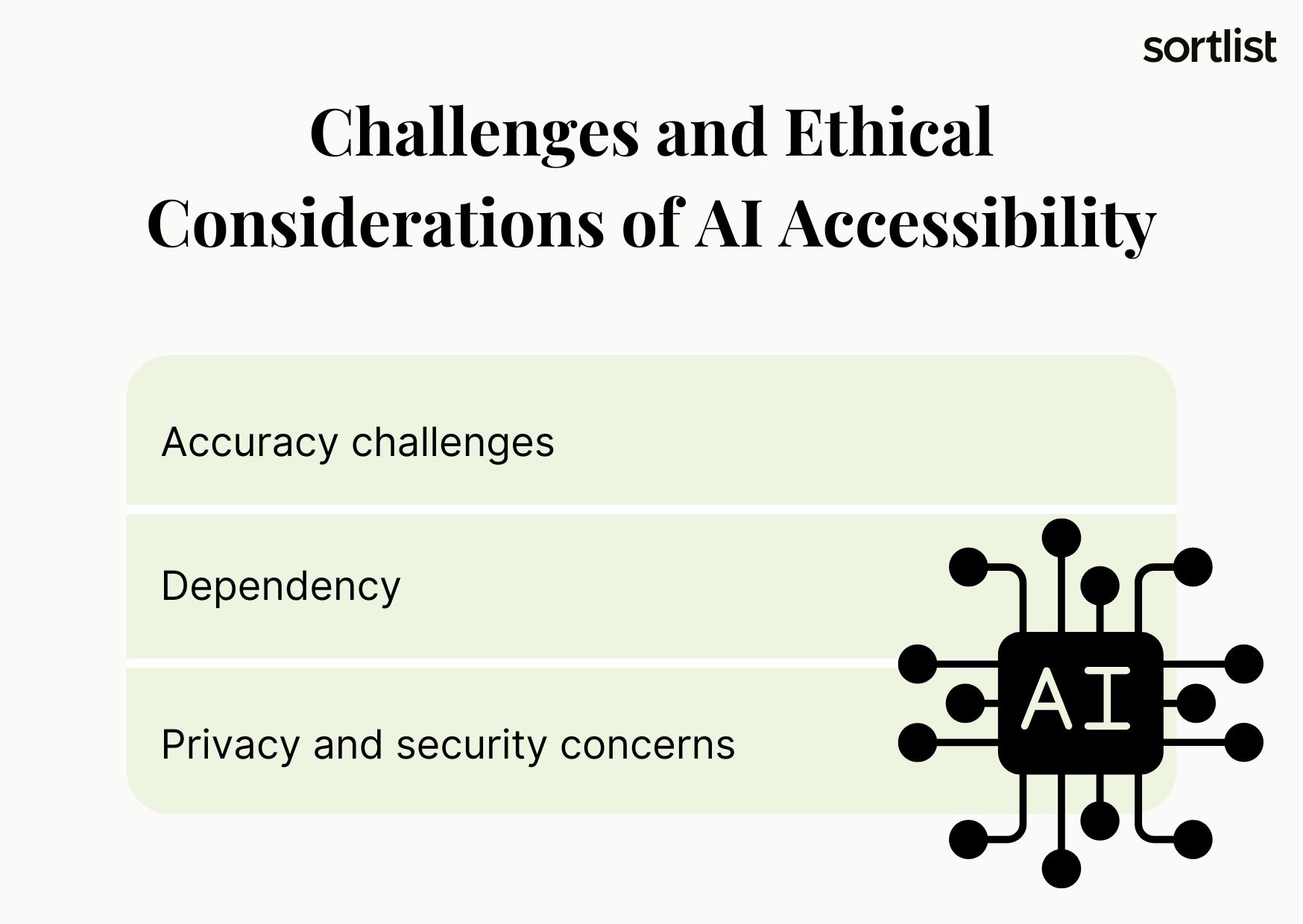
But as the saying goes, “with power comes great responsibility.” It’s our job to help you understand the various ethical implications and challenges you will face along the way.
- Accuracy challenges: AI is rapidly evolving and improving, but you need to be careful because it can still make mistakes. Especially in captions, descriptions, translations, or any other task it’s given.
- Dependency: AI tools can definitely make your job easier and automate processes. But you want to avoid relying on it too much. It can cause you to overlook other important aspects or accessibility guidelines.
- Privacy and security concerns: AI in assistive technology tends to work with a lot of personal data. Raising significant concerns about the collection, storage, and use of that data.
The use of AI needs to be handled with care and deep consideration to promote greater inclusion and autonomy for people living with disabilities.
Future Trends and Innovations
We haven’t yet seen the full power of AI in assistive technology. The truth is, it’s not easy to look ahead and anticipate what will happen next. However, trends in the industry lead us to believe that AI will include accessibility in the future:
- Personalized assistive solutions tailored to each individual’s needs.
- Integration between AR and VR and assistive technologies to enhance accessibility and sensory experiences.
- Mobile apps and wearables will include more customizable accessibility features.
- AI in accessibility will include gamification to motivate and encourage users with disabilities.
Each of these innovations, and others that may emerge, are likely to enhance sensory experiences, provide real-time information, and improve usability.
Conclusion
The future of AI in assistive technology is promising, with trends and innovations on the horizon. It’s up to you to embrace this trend and make a difference in the world we live in. Start investing in a brighter and more inclusive future.


